
Retail Freight and Distribution Transportation Across Ontario, Quebec and Atlantic Canada

Retail freight is graded on arrival, not on departure. A load that misses its receiving window costs more than the shipment was worth. Dependable Freight Solutions moves commercial retail freight between Ontario, Quebec and approved East Coast destinations, capturing receiving requirements and appointment constraints during planning so deliveries land inside the window your customer set.

What Makes Retail Freight Different

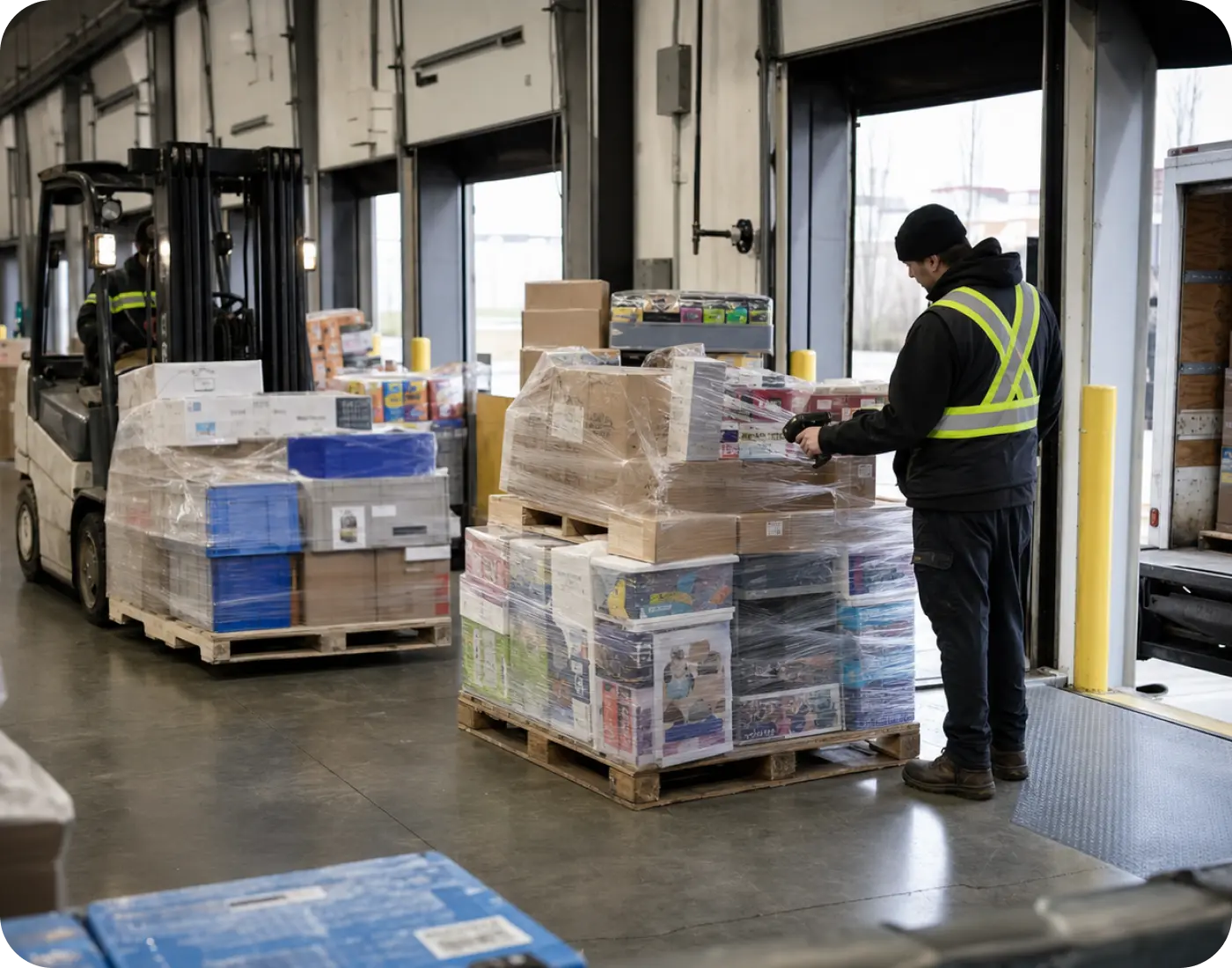
Retail freight demands accuracy, consistency, and strict adherence to delivery schedules. Distribution centres and retail stores often operate with fixed appointment times, specific pallet configurations, labelling standards, and documentation requirements. Missing these requirements can result in delivery delays or refused shipments.
Seasonal demand also places added pressure on transportation capacity, especially during holiday periods and major promotional events. From everyday merchandise and store fixtures to promotional displays, retail shipments require careful planning to keep inventory moving and shelves fully stocked.

Dependable Freight Solutions helps retailers meet delivery deadlines, comply with receiving requirements, and maintain a reliable supply chain through customized freight solutions customized to every shipment.

Retail Freight We Handle

Merchandise, fixtures and support freight all fall within review:

Retail Businesses We Support

Retail Distribution Centres

Central facilities consolidating inbound merchandise and pushing replenishment to stores. Freight is high volume and appointment-driven, with receiving compliance affecting the shipper's standing more than the freight cost does.

Multi-Location Retail Chains

Operators supplying their own store network. Deliveries reach a mix of mall, plaza and street-front locations where access, hours and unloading capability vary store to store.

Consumer Goods Suppliers and Brands

Vendors shipping into retailer distribution networks under routing guide requirements. Their freight succeeds or fails on window compliance and documentation accuracy.

E-Commerce and Fulfilment Operations

Businesses moving inventory into fulfilment facilities and between nodes. Volume is uneven, promotional spikes are sharp, and inbound receiving windows are strict.

Store Fixture and Display Manufacturers

Producers of shelving, displays, millwork and signage shipping to renovation and new-build sites. Freight is bulky, damage-sensitive and tied to a construction schedule.

Retail Construction and Build-Out Contractors

Teams completing store fits and renovations. Their deliveries arrive at active sites with limited storage, where sequence matters as much as speed.
How Our Services Fit Retail Movements

Less Than Truckload (LTL)

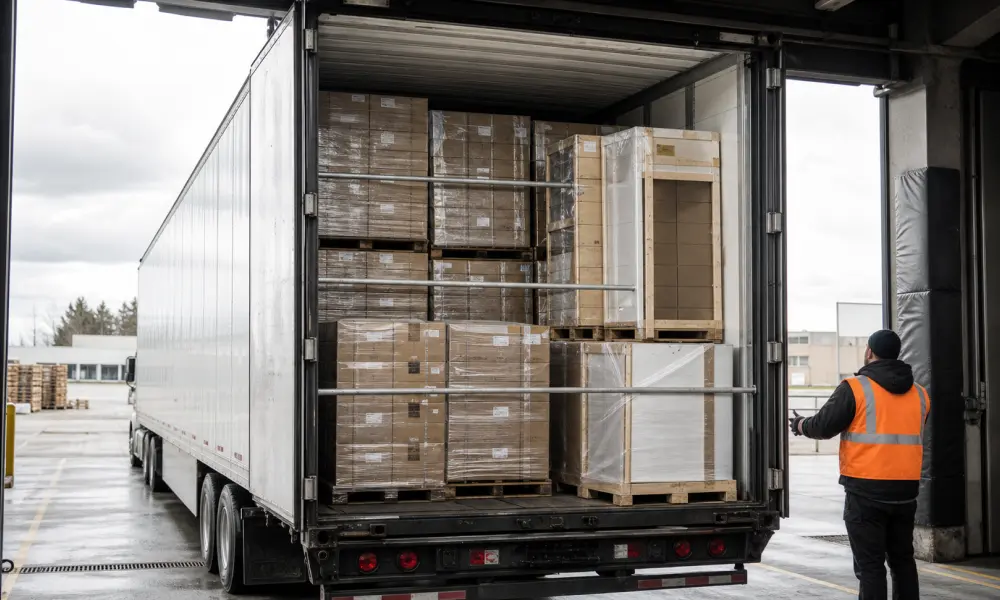
LTL suits store replenishment, smaller vendor shipments into distribution centres, and multi-location deliveries that do not justify a full trailer. It is the practical option for recurring partial volume. Because freight shares trailer space, palletizing quality and labelling accuracy carry directly into whether receiving accepts it cleanly.

Full Truckload (FTL)

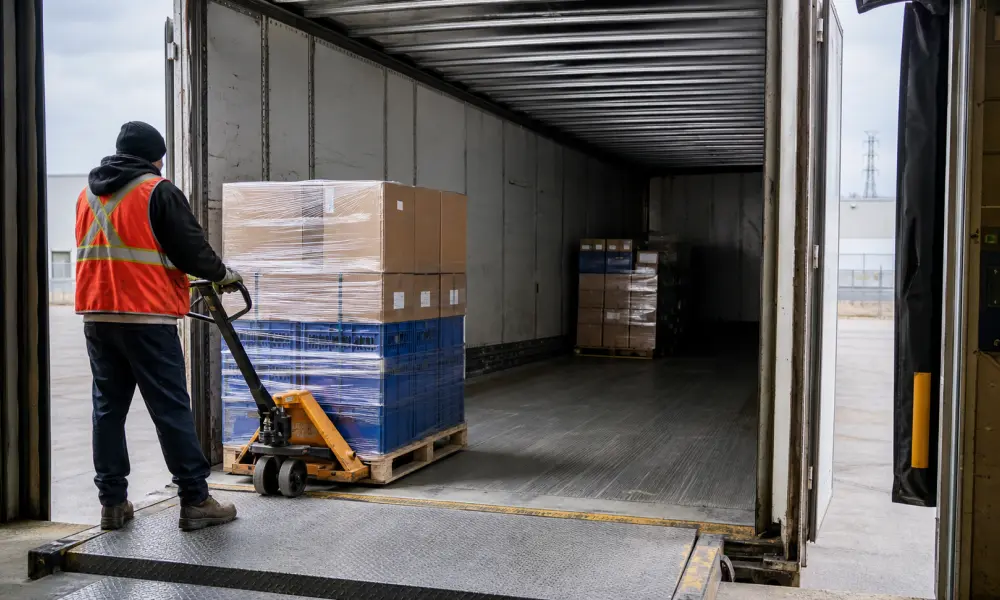
FTL fits distribution centre inbound volume, seasonal merchandise pushes, promotional programs and fixture packages for store builds. A dedicated trailer supports a firm appointment time and keeps the load untouched between origin and receiving, which matters when presentation on arrival is being assessed.

Heavy Haul

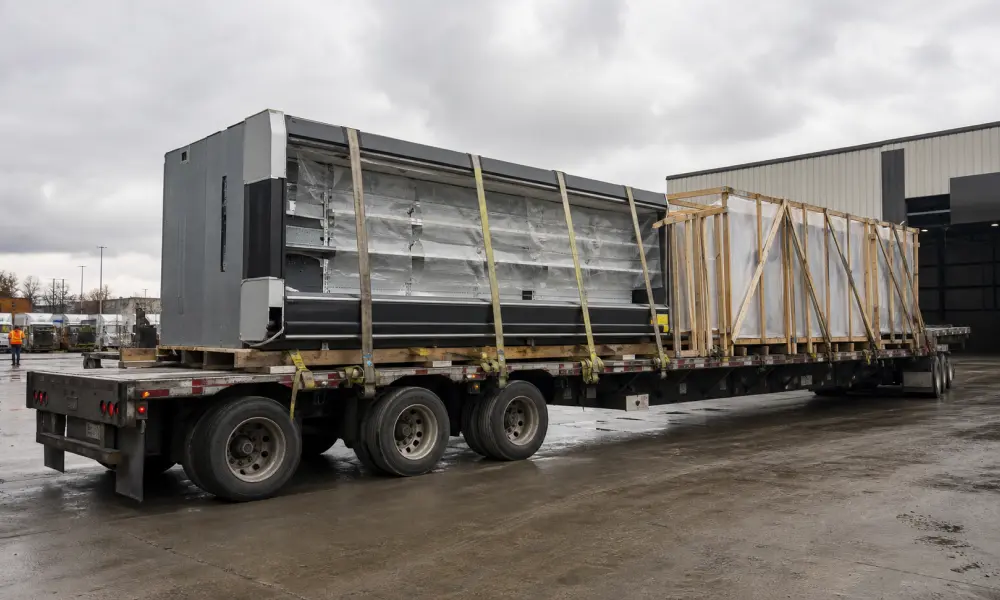
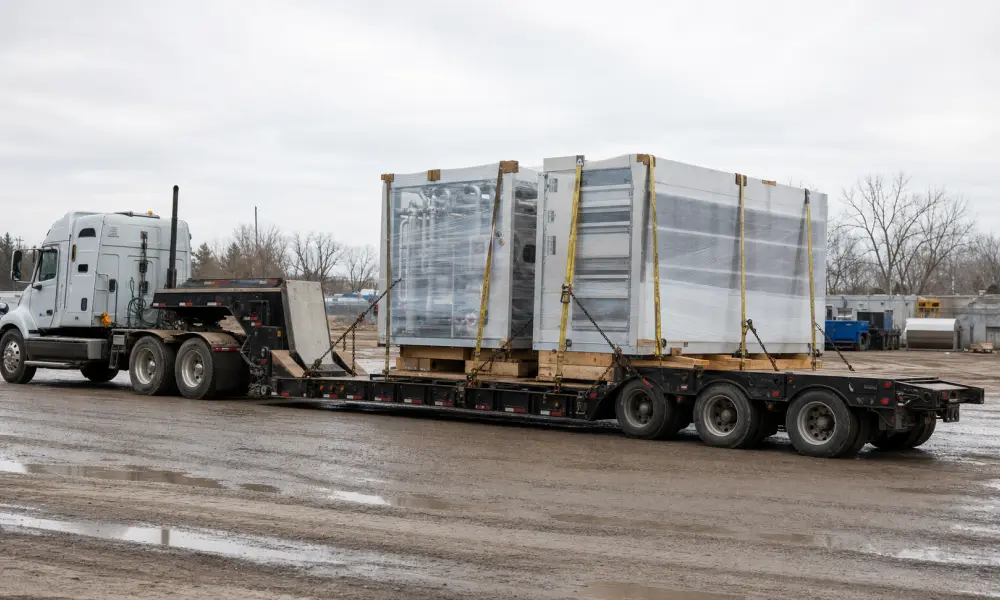
Heavy haul applies to retail freight beyond standard limits: large display structures, refrigeration and store equipment, oversized millwork and fixture assemblies for major renovations. These move with route review and permitting completed ahead of the delivery date, coordinated against the construction schedule.

Selecting a Service Around Receiving Requirements

Service Best For Capacity Typical Aerospace Cargo
LTL Partial loads, recurring small shipments 1 to 6 pallets typical Boxed merchandise, apparel, store supplies, displays
FTL Full or exclusive-use loads Full trailer Consolidated merchandise, promotional programs, fixture packages
Heavy Haul Oversized or overweight freight Specialized equipment Large displays, store equipment, oversized millwork
Retail is one sector where the receiving requirements can override the freight characteristics entirely. A load that would ordinarily suit partial service moves as a full truckload because the appointment demands a single arrival at a fixed time.
The questions worth answering before booking: What is the receiving window, and how much tolerance does it carry? Does the destination require a booked appointment, and who books it? Is delivery to a dock, or to a store with no dock and possibly no forklift? Are there restrictions on delivery hours, particularly at mall and downtown locations? How are the pallets built, and do they meet the receiver’s stacking and height requirements? Is a liftgate or inside delivery expected? Does the timing sit inside a peak period where capacity needs securing early? And for build-out freight, where does this delivery sit in the construction sequence?
Send the routing requirements with the enquiry. They shape the plan more than the freight does.

Equipment for Retail Freight

Retail freight is generally protection-sensitive rather than weight-sensitive. Merchandise in retail packaging is going onto a shelf, so cartons that arrive scuffed or damp create problems even when the product inside is fine.

Roll-Tite

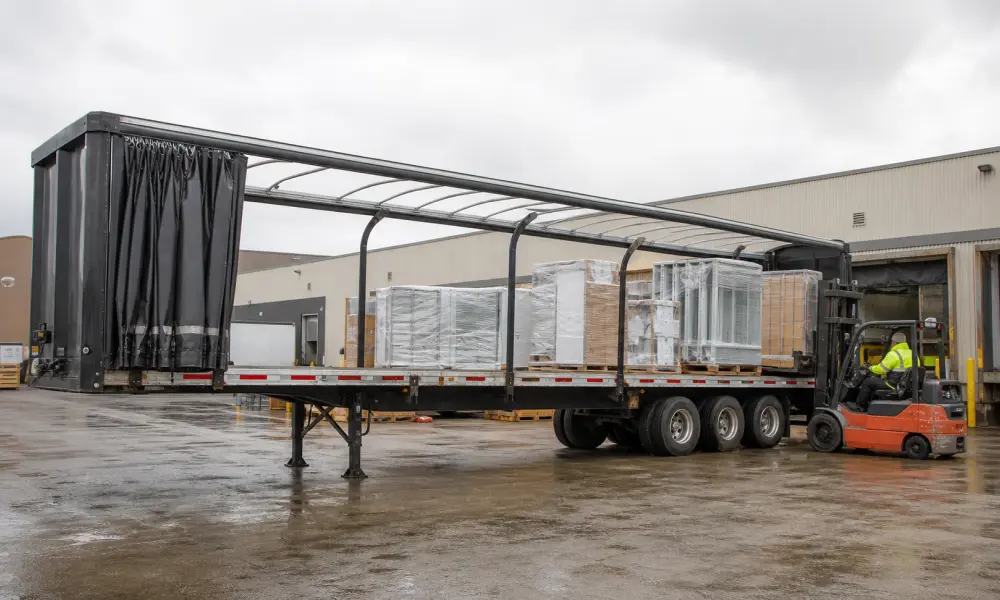
A rolling tarp over a flat deck, providing enclosure with side and overhead loading access. Suits palletized merchandise, displays and fixtures that need protection from weather while allowing loading methods a rear door would restrict.

Flatbed

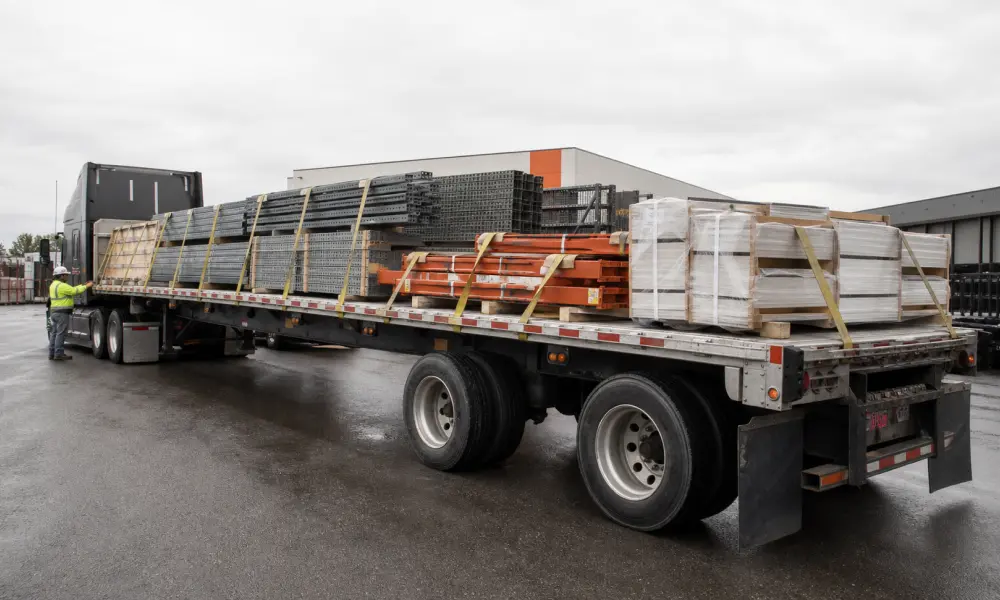
Open deck loading from any side. Applicable to crated fixtures, racking, building materials for store construction and freight that tolerates tarping or does not require enclosure.

Step Deck

The lowered deck provides height clearance for tall fixture assemblies, display structures and store equipment that would exceed legal height on a standard deck.

Lowboy

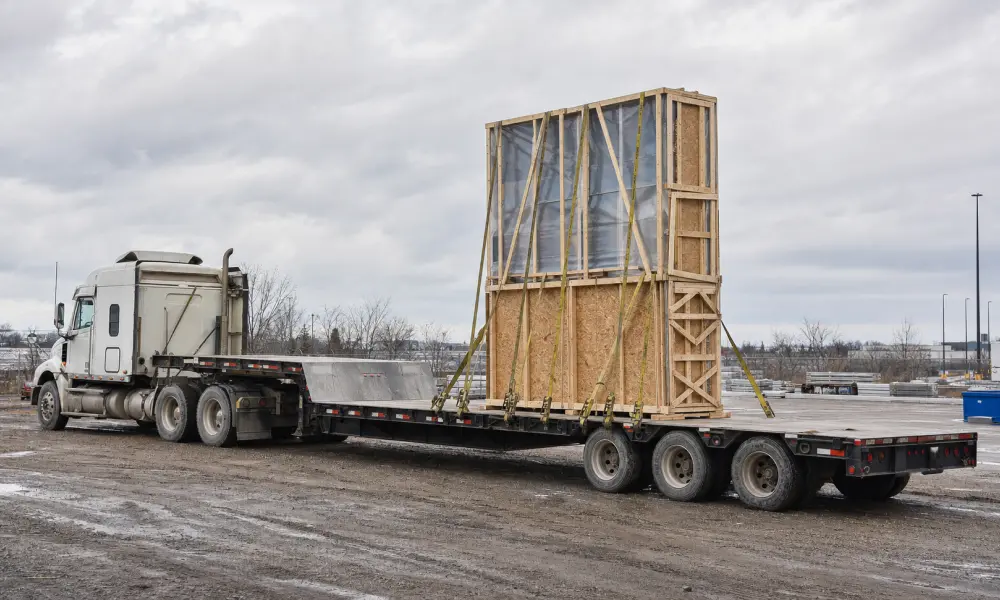
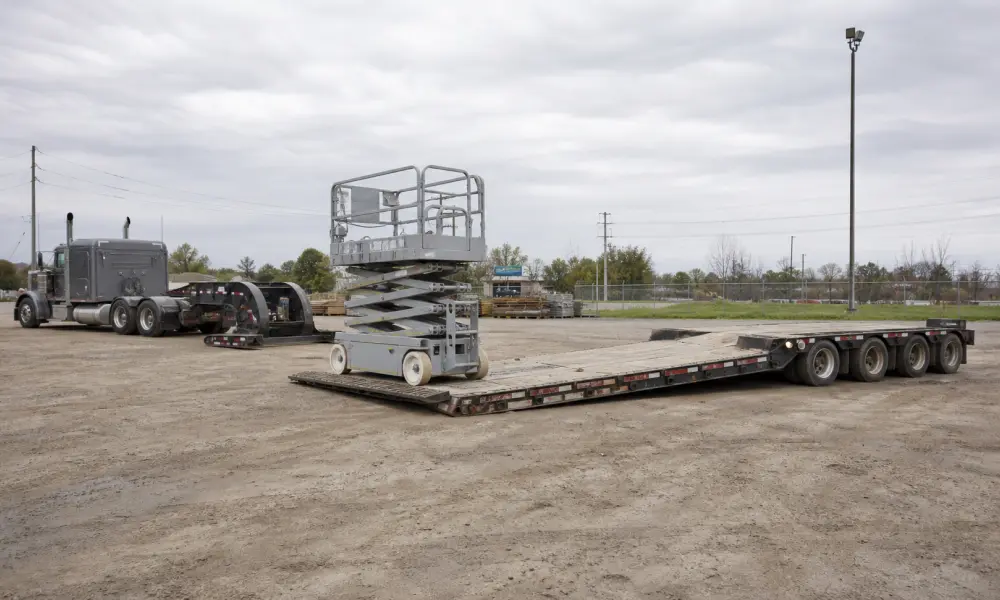
Lowest available deck height, used for tall and heavy items. Relevant to large store equipment and heavy fixture assemblies where clearance governs the route.

RGN (Removable Gooseneck)

The detachable gooseneck creates a ramp for drive-on or winch-on loading, applicable to wheeled equipment moving into or out of a retail site.

Distribution Lanes We Serve

Retail distribution across eastern Canada tends to run outward from concentrated distribution infrastructure in southern Ontario and greater Montreal toward store networks spread across Quebec and the Atlantic provinces, where population is dispersed and store formats vary widely.

Ontario to the East Coast

Eastbound freight typically carries merchandise from Ontario distribution centres and vendors toward Quebec and Atlantic receiving facilities and store networks. Seasonal programs, promotional merchandise and fixture packages for new stores and renovations all move this direction. Because Atlantic store networks are geographically spread, consolidation into fewer, well-planned deliveries usually beats frequent partial runs, and peak season programs benefit from capacity conversations held months ahead.

East Coast to Ontario

Westbound movements include returns and reverse freight heading back to central processing, unsold seasonal merchandise recovering after a selling period, pallet and display returns, and inventory transfers between regional facilities. Reverse freight is routinely treated as an afterthought in this sector, which is exactly why planning it alongside the outbound leg tends to save money.

The Path From Booking to Receiving

1.

Freight and receiving details.

Pallet count and configuration, weight, dimensions, both addresses, and the receiving requirements including window, appointment rules and any routing guide instructions.

2.

Destination capability check.

Dock or no dock, forklift availability, liftgate requirements, delivery hour restrictions and access limitations at store locations.

3.

Service and equipment selection.

LTL, FTL or heavy haul is recommended with the trailer suited to the freight and the delivery conditions.

4.

Appointment and timing coordination.

Delivery timing is planned against the receiving window, with responsibilities for booking confirmed so nothing falls between parties.

5.

Loading and documentation.

Freight is loaded and secured, with paperwork prepared to match receiving requirements.

6.

Delivery and return leg.

The load is delivered inside the window, and any reverse freight, pallet recovery or display return is arranged.

Why Retail Shippers Work With Us

Windows Treated as the Requirement They Are

Receiving windows are captured at booking and planned toward, because in this sector an early arrival and a late one cause the same problem.

Store Delivery Realities Understood

Mall access, restricted hours, no dock and no forklift are normal conditions in retail delivery, and they are confirmed during planning rather than discovered by the driver.

Peak Season Planning

Capacity for seasonal programs is discussed ahead of the surge, when it is still available to discuss.

Merchandise and Fixtures Under One Contact

Weekly replenishment freight and a renovation fixture package can run through the same relationship instead of separate carriers.

Reverse Freight Included in the Plan

Returns, unsold seasonal stock and pallet recovery are planned with the outbound rather than handled as an afterthought.

Documentation That Matches Requirements

Paperwork is prepared against what the receiver actually requires, which is where a good share of retail delivery friction originates.
Retail Freight Questions

Who books the delivery appointment, you or us?
This is confirmed at planning and varies by account. What matters is that it is settled explicitly, since missed appointments most often trace back to both parties assuming the other was booking.
Earlier than feels necessary. Capacity across the sector tightens in the same weeks for everyone, and shippers who plan in late summer have options that shippers calling in November do not.
Yes. Fixtures, shelving, millwork and displays are within scope, including oversized assemblies on heavy haul equipment. Delivery sequencing against the construction schedule is usually the critical detail.
Yes, and planning it with the outbound leg generally produces a better result than arranging it separately after the fact.
Send it with the enquiry. Requirements around pallet build, labelling, documentation and delivery timing are captured during planning so the load is presented the way the receiver expects.

Get in Touch with Dependable Freight Solutions

If you’re ready to schedule a shipment, need a price quote or want to learn more about our freight forwarding service, our team is here to help. We make freight transportation easy, efficient and reliable for businesses throughout Atlantic Canada. Dependable Freight Solutions provides professional freight services, speedy freight delivery and reliable logistics support!