
Industrial Freight and Machinery Transportation Across Ontario, Quebec and Eastern Canada

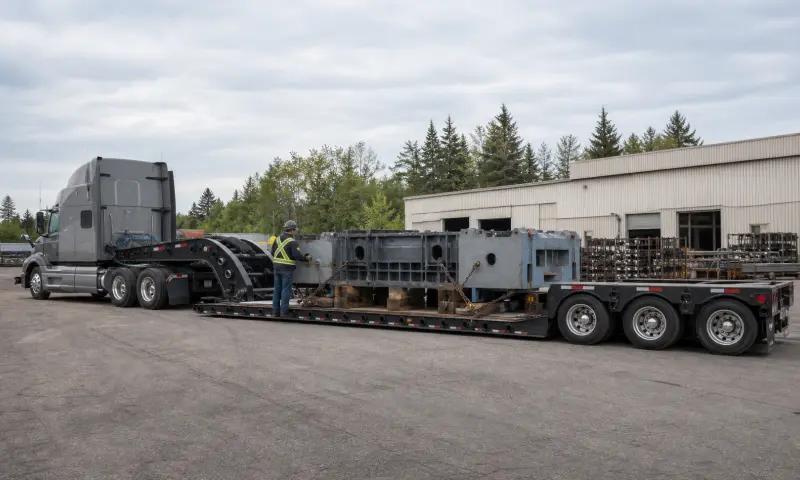
Most industrial freight falls into an awkward middle: too large or too heavy for a standard partial load, not oversized enough to be treated as a project move. Dependable Freight Solutions handles that ground directly, moving fabricated steel, machinery, components and plant equipment between Ontario, Quebec and approved East Coast destinations with the deck, securement and lift plan settled before dispatch.

The Freight Problem Industrial Shippers Actually Have

Industrial manufacturing covers a wide range of products, making freight transportation more complex than standard shipping. Equipment, machinery, fabricated metal components, industrial parts, and maintenance supplies all differ in size, weight, and handling requirements. Some shipments are oversized or unusually heavy, while others combine multiple products with different transportation needs in a single load. In addition, urgent equipment failures and scheduled plant shutdowns often require precise delivery timelines to minimize operational downtime.
Dependable Freight Solutions delivers customized industrial freight solutions by selecting the right equipment, handling methods, and transportation strategy for every shipment, ensuring safe and dependable delivery.

Industrial Freight We Assess

Shipment review across this sector covers fabricated product, machinery and supply:

Industrial Operations We Work With

Metal Fabricators and Welding Shops

Producers of weldments, frames, structures and custom assemblies. Freight is heavy, irregularly shaped and rarely palletized, which makes securement planning more relevant than pallet counts.

Machine Shops and Precision Manufacturers

Operations shipping machined components, dies and finished parts. Volumes vary from single skids to full loads, with recurring lanes to the same customers.

Steel Service Centres and Metal Distributors

Businesses distributing plate, bar, coil and structural product. Loads are weight-dense, reaching legal limits well before filling a trailer, with length often driving deck choice.

Equipment Dealers and Rebuilders

Dealers and rebuild shops moving machinery in and out. Freight is frequently uncrated, wheeled or requiring drive-on loading, and condition on arrival matters commercially.

Industrial Distributors and MRO Suppliers

Suppliers of bearings, fittings, hydraulics and consumables to plants and contractors. High shipment frequency at partial-load size, with occasional urgent breakdown orders.

Plant Maintenance and Engineering Teams

In-house teams handling replacements, upgrades and relocations. Their freight arrives on two clocks: planned shutdown work booked well ahead, and breakdown freight that cannot wait.
Matching Services to Industrial Loads

Less Than Truckload (LTL)

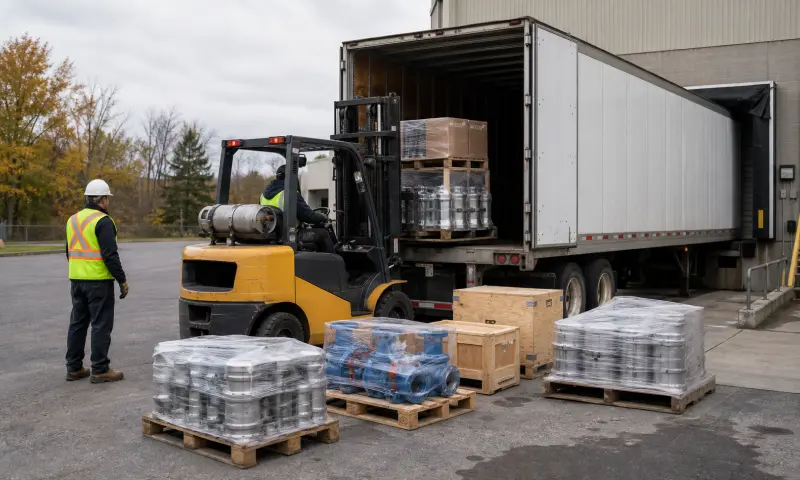
LTL suits industrial distributors and shops moving palletized supply, components, fittings and smaller crated items. It handles routine replenishment economically when a dedicated trailer is not warranted. Freight must be crated or palletized to survive handling at transfer points, which rules out some uncrated industrial items.

Full Truckload (FTL)

FTL fits weight-dense steel loads, machinery that should not be handled at intermediate points, long or awkward fabrications, and consolidated multi-item shipments. It is also the practical answer for uncrated equipment, since a dedicated trailer removes the transfer handling that damages this kind of freight.

Heavy Haul

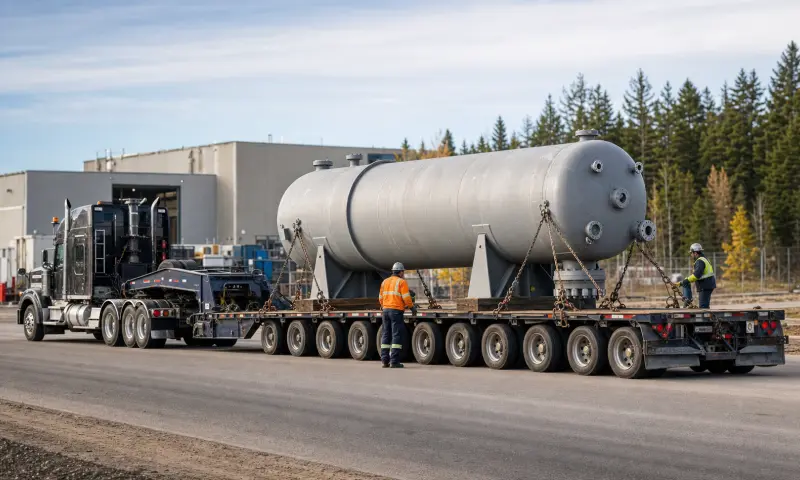
Heavy haul carries machinery and fabrications past standard dimensional or weight limits: large machine tools, vessels, conveyor systems, presses and plant equipment. Route review, deck configuration and permitting are completed before a delivery date is confirmed, and lift arrangements are coordinated with both sites.

Choosing a Service When the Load Does Not Fit a Box

Service Best For Capacity Typical Aerospace Cargo
LTL Partial loads, recurring small shipments 1 to 6 pallets typical Machined parts, fasteners, hardware, crated avionics
FTL Full or exclusive-use loads Full trailer Sub-assemblies in fixtures, consolidated pallets, composite panels
Heavy Haul Oversized or overweight freight Specialized equipment Assembly jigs, machine tools, test rigs, large structures
Pallet count is the wrong opening question for most industrial freight, because a good share of it does not travel on pallets at all.
Better ones: What are the overall dimensions of the piece as it actually sits, not as it appears on a drawing? What does it weigh, and across how much deck does that weight land? Where are the lift points, and does the piece have any? Is it crated, skidded or bare? Can a forklift handle it at both ends, or does one end need a crane? Is length the binding constraint, which it often is for structural steel and long fabrications? Does the receiving site have the equipment and the space to take it off? And is this planned work or a breakdown, because the answer changes what tradeoffs are worth making.
Send photographs. For irregular industrial freight, one photograph settles questions that three emails will not.

Deck Selection for Industrial Freight

Deck choice for this sector turns on three things: how the piece is loaded, how its weight sits, and whether it needs protection. Machinery with concentrated point loads and long fabrications each rule out options that would suit ordinary freight.

Roll-Tite

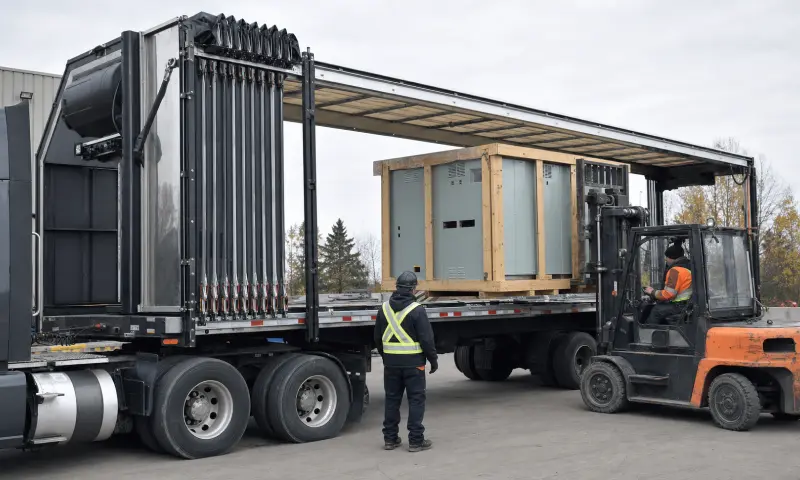
A rolling tarp over a flat deck, combining enclosure with side and overhead loading. Useful for finished machinery, control equipment, painted assemblies and anything that needs to arrive clean and dry but cannot load through a rear door.

Flatbed

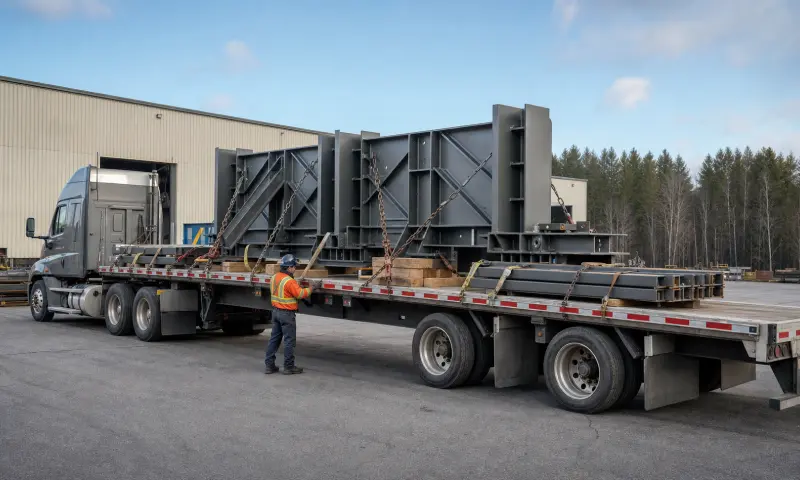
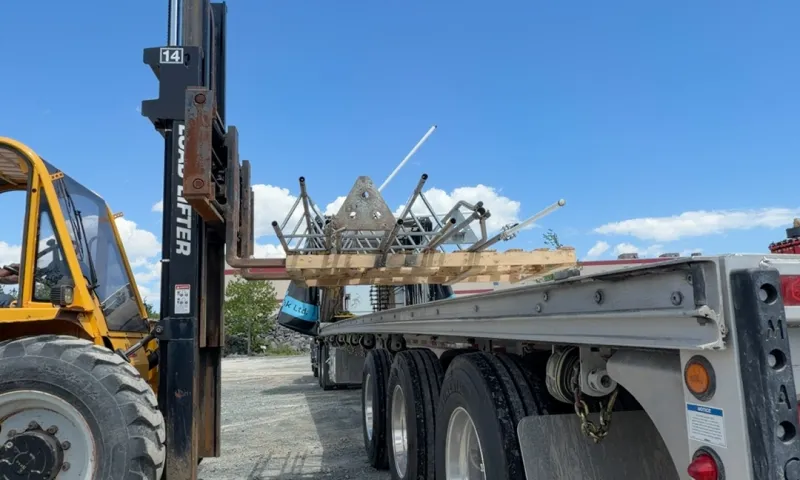
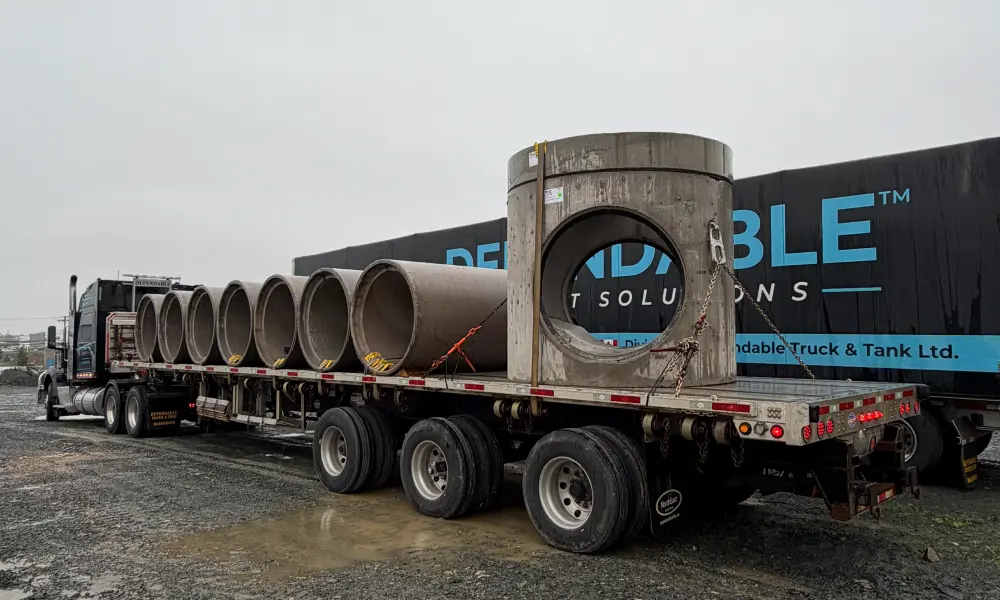
Open deck access from every side. The workhorse for structural steel, plate, coil, weldments and crated machinery within legal limits, and the simplest option when a crane or overhead lift is doing the work.

Step Deck

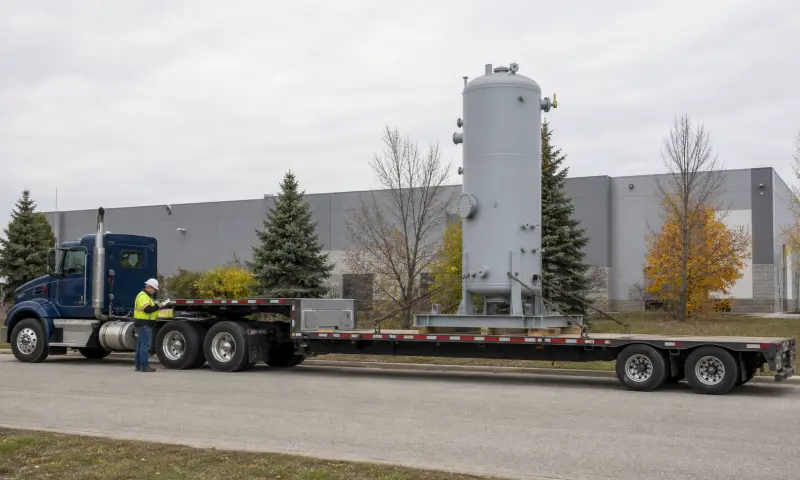
The lowered rear deck buys height, which is the constraint that most often takes a machine off a flatbed. Applies to taller machine tools, tanks, fans and equipment on skids, and lowers the deck for ramp loading.

Lowboy

The lowest deck height available, intended for tall and heavy pieces. Relevant to large machine tools, presses and heavy fabricated units where overhead clearance dictates the route.

RGN (Removable Gooseneck)

The gooseneck detaches to form a ramp, allowing wheeled and tracked equipment to drive or winch on. The answer for self-propelled machinery and equipment that cannot be lifted.

Regional Coverage for Industrial Shippers

Manufacturing, fabrication and industrial distribution run heavily through southern Ontario and the Quebec industrial corridor, with processing, marine, forestry and resource operations across Atlantic Canada generating steady demand for equipment, parts and fabricated product from central Canadian suppliers.

Ontario to the East Coast

Eastbound freight commonly carries fabricated steel, machinery, replacement components and MRO supply toward Quebec and Atlantic industrial operations. Plants in Atlantic Canada frequently source equipment and fabrication from Ontario and Quebec suppliers, which makes this a dependable lane for both planned project work and urgent replacement freight. Shutdown-driven equipment moves cluster around scheduled maintenance windows and benefit from booking well ahead of them.

East Coast to Ontario

Westbound movements include equipment returning for rebuild or repair, fabricated product from Atlantic and Quebec shops heading to Ontario customers, machinery relocating between facilities, and surplus equipment moving to auction or resale. Rebuild traffic in particular tends to run both ways on the same lane, since the unit that goes out for repair comes back.

How We Work a Load From Enquiry to Delivery

1.

Load description and photos.

Dimensions, weight, crated or bare, and images of anything irregular. This step does more to prevent problems than any other.

2.

Weight distribution and lift review.

We look at where the weight sits and how the piece is picked up, since both affect deck selection and securement.

3.

Site access at both ends.

Forklift capacity, crane availability, dock configuration, yard space and ground conditions are confirmed before equipment is assigned.

4.

Service and deck recommendation.

LTL, FTL or heavy haul is proposed with the deck type that suits the piece, the lift and the route.

5.

Route and permitting where required.

Lanes are checked for restrictions, and oversized movements go through permitting review ahead of any committed date.

6.

Securement, delivery and paperwork.

The load is secured to the piece rather than by default, delivered to the agreed window, and documented on completion.

What Industrial Shippers Value in This Relationship

Awkward Freight Taken Seriously

Loads that do not fit standard categories get assessed on their own terms instead of being quoted on assumptions and repriced later.

Lift Planning Before Arrival

Rigging and unloading arrangements are confirmed at both ends during planning, so the truck does not arrive at a site that cannot receive it.

Breakdown Response

Urgent replacement freight is treated as urgent. When a plant is down, the useful answer is a realistic time, given quickly.

One Carrier Across the Range

Palletized MRO supply, dense steel loads and permit-level machinery can all run through the same relationship.

Shutdown Scheduling

Planned maintenance work can be booked against fixed windows, with equipment reserved rather than hoped for.

Straight Talk on Feasibility

If a piece needs rigging services, disassembly or a specialized carrier, we say so during assessment rather than discovering it on site.

Industrial Freight Questions

My load is heavy but small. Why does that complicate things?
Concentrated weight across a short deck length creates point loading, which affects deck selection and securement and sometimes requires spreading or blocking. A compact three tonne piece is a different planning problem than three tonnes spread across a trailer.
Often yes, on a dedicated trailer where the load is not handled at transfer points. Uncrated freight generally rules out partial load service, since transfer handling is where that damage happens.
Freight transportation is our service. Rigging, disassembly and installation are separate trades, and responsibilities at each end should be confirmed during planning so nobody arrives assuming the other party is handling the lift.
It depends on lane, equipment availability and the size of the piece. Call rather than email for these, and you will get a realistic answer quickly instead of an optimistic one slowly.
Usually length. Steel loads often reach legal length considerations before they reach weight limits, and overhang rules affect both deck choice and route.
Yes, and it is common. The large piece typically dictates the trailer and the securement plan, with palletized freight loaded around it.
Do you handle equipment going out for rebuild and coming back?
Dimensions as the piece sits, weight, whether it is crated or bare, lift point information, both addresses, unloading capability at destination, and photographs of anything irregular.