

Lowboy Trailer and RGN Services Between Ontario and the East Coast

When machinery is too tall and too heavy for any deck that sits at normal height, the deck has to drop between the axles. Dependable Freight coordinates lowboy and RGN transportation between Ontario and Canada’s East Coast, planning each move around load weight, height, ground clearance, route restrictions and permits. Send the specifications and we will build the plan around them.

Low Deck Height and Drive On Loading From an RGN Trailer

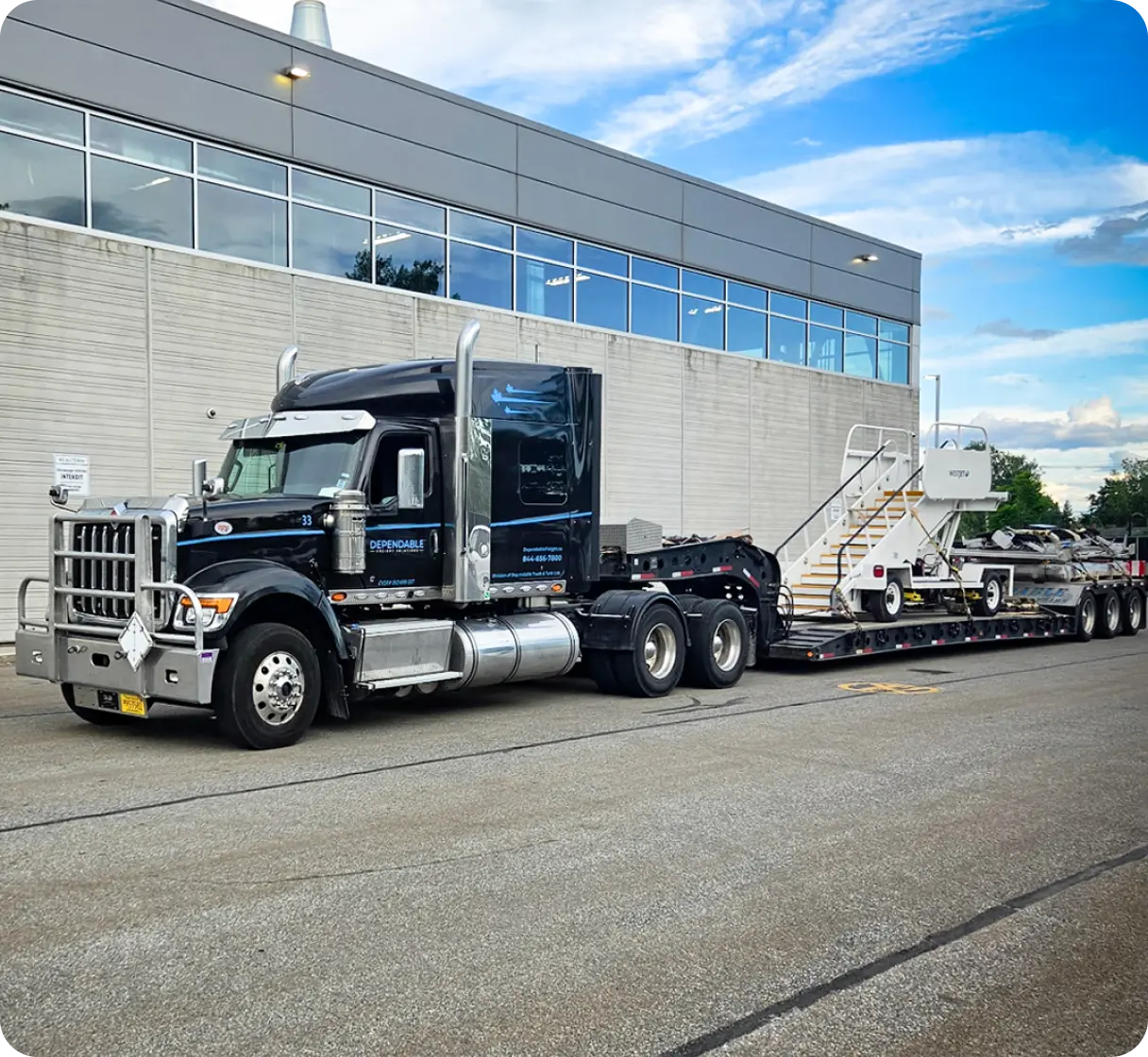
A lowboy carries its cargo in a well that sits between the gooseneck at the front and the rear axles, which puts the load closer to the road than any other common trailer. That single design decision is what allows tall machinery to travel without exceeding legal height, and it is why excavators, dozers and large industrial equipment end up here rather than on a step deck.

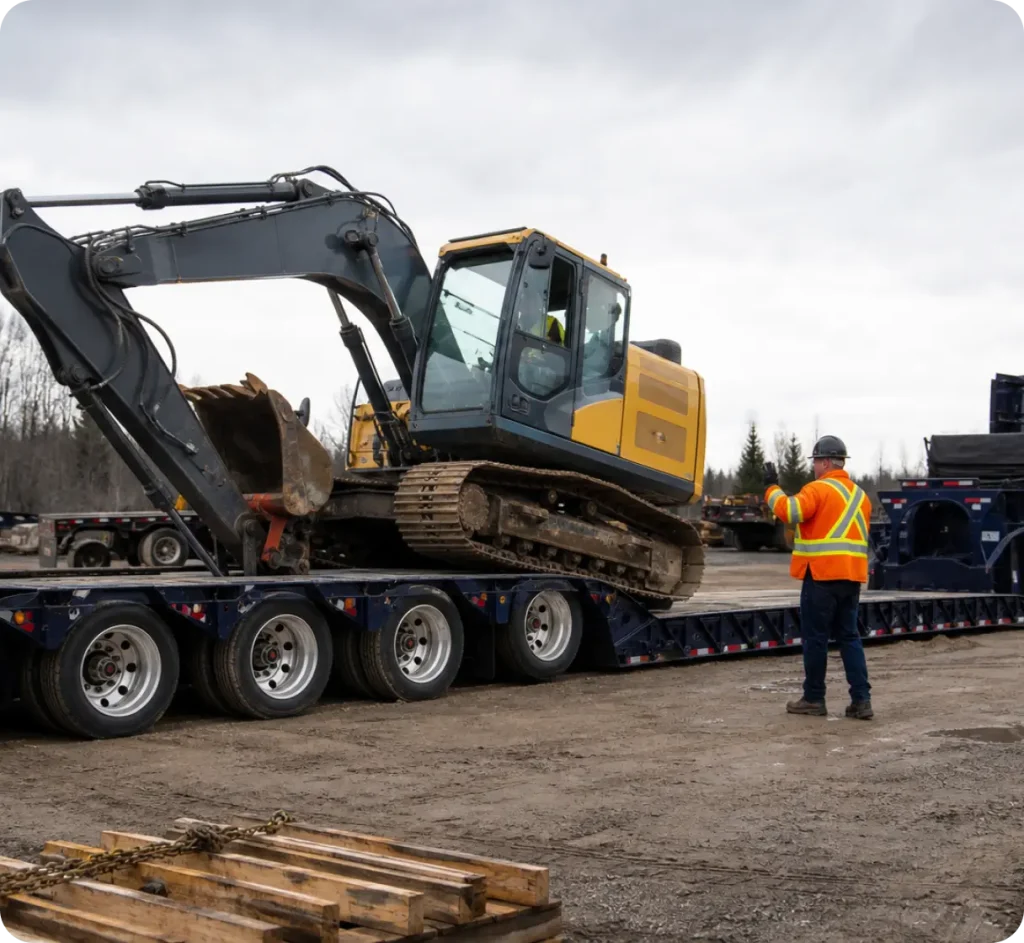
The removable gooseneck version takes it further. The neck detaches and lowers to the ground, turning the front of the trailer into a ramp so that wheeled and tracked equipment can be driven straight on. Loading that would otherwise need a crane becomes a matter of driving forward under supervision.

Capacity comes from axles. Additional axles spread weight across more contact points, which is how these trailers legally carry loads that would overload a standard configuration, and it is also why routes and permits need checking early.

Trailer suitability depends on the freight dimensions, weight, loading method, route, securement requirements, permit conditions and available equipment.

Is a Double Drop Lowboy Trailer Right for Your Shipment?

Two numbers usually settle it: the height of the machine and the weight on its axles. If the equipment stays over legal height even on a lower deck, or if the weight pushes past what a standard axle configuration can carry, the load belongs in a well rather than on a deck. Loading method is the third factor. Equipment that moves under its own power is far simpler to load down a detachable neck than to lift by crane. Work through the points below, then send the make, model and operating weight of the machine, since manufacturer specifications give us the most reliable starting point.
This equipment may be appropriate when:

Freight We Evaluate, From Machinery to Mining Lowboy Trailer Loads

Almost everything on a lowboy is a machine. The freight arrives with a serial number, an operating weight in a manual, & a set of dimensions that were measured rather than estimated. That makes planning more precise than general freight, provided the specifications reach us early.

LTL preparation checklist:

Acceptance note: Shipment acceptance is based on the cargo type, complete dimensions, total weight, weight distribution, loading method, route approval, permit conditions & trailer availability. Restricted or regulated freight may require additional review.

Benefits of Removable Gooseneck Trailer Transportation

Heavy haul moves depend on permits, route approval and legal weight limits. Capacity is never assumed until the route and the load have both been reviewed.

Lowest Deck Height Available

The well deck sits between the axles, giving tall machinery the greatest chance of travelling within legal height limits.

Drive On, Drive Off Loading

The detachable neck lowers to create a ramp, so suitable equipment can be loaded without lifting gear at either site.

Capacity Through Axles

Additional axle configurations spread heavy loads across more contact points to meet legal weight requirements on approved routes.

Fewer Lifting Points Needed

Machinery that has no safe lifting points can still be moved, because the loading method does not depend on a crane.

Stability for Tall Equipment

A lower centre of gravity keeps tall, narrow machinery more stable through corners, grades and rough surfaces.

Job Site Access

Equipment can be delivered to yards, quarries and construction sites where no dock or overhead lifting exists.


RGN Lowboy Trailer Options for Full Truckload and Heavy Haul

Heavy equipment does not share a trailer. These moves run as dedicated capacity, and the service question is which configuration the machine needs rather than how the deck gets divided between customers.

Full Truckload Machinery Moves

Dedicated trailer capacity for a single machine or matched set, with the equipment, route and schedule planned around that load alone.

Permit and Oversized Heavy Haul

Loads exceeding legal dimensions or weight require permits, approved routing and in some cases escorts. Lead times are longer, and we build that into the schedule at quoting.

Fixed Neck Lowboy Trailer Configurations

Where the load can be loaded by crane rather than driven on, a non-detachable neck configuration may be reviewed. Availability depends on the lane and the date.

Lowboy Gooseneck Trailer Transportation Across Ontario and Canada's East Coast

Route planning carries more weight on this service line than any other. Bridge ratings, overhead structures, grade changes, turning radii, and provincial permit conditions all shape the routing, and a road that works for a standard trailer may not work for a loaded well deck. Permits are issued province by province, so a move crossing four jurisdictions can involve four sets of conditions and lead times. Site conditions decide the rest. Explore your corridor or your province below to see where we plan heavy equipment moves.

Ontario to East Coast Lowboy Freight

Machinery originating in Ontario moving through Quebec toward approved Atlantic Canadian destinations, with permits confirmed before dispatch.

East Coast to Ontario Lowboy Freight

Equipment leaving approved East Coast locations for Ontario, planned under the same permit and route review. CTA: View East Coast to Ontario Shipping

Heavy Equipment Transportation in Ontario

Machinery pickups and deliveries across Ontario, routed around bridge and clearance limits.

Heavy Equipment Transportation in Quebec

Permit-coordinated moves through Quebec on the route between Ontario and Atlantic Canada.

Heavy Equipment Transportation in New Brunswick

Oversized and overweight machinery moves on approved New Brunswick routes.

Heavy Equipment Transportation in Nova Scotia

Project and industrial equipment delivered to approved Nova Scotia sites.

Heavy Equipment Transportation in Prince Edward Island

Machinery moves to approved Prince Edward Island locations, reviewed against access conditions.

Heavy Equipment Transportation in Newfoundland and Labrador

Equipment transport serving approved Newfoundland and Labrador destinations.

How We Review Lowboy Trailer Load Capacity Before Dispatch

1.

Send the Machine Specifications

Provide the make, model, operating weight, transport dimensions and any attachments travelling with the equipment.

2.

Confirm Weight and Configuration

Our team reviews total weight and distribution against axle configurations to establish what can legally move on the route.

3.

Plan the Loading Method

Drive on, winch on or crane loading is decided, along with ramp angle, ground conditions and space at both sites.

4.

Arrange Permits and Routing

Provincial permits, approved routing and any escort requirements are organised, with lead times built into the schedule.

5.

Load, Secure and Move

The machine is loaded, chained and secured to plan, then moved on the approved route with updates through the trip.

Why Businesses Choose Dependable for Lowboy Trailer Transport Services

Weight Reviewed Against the Route

Capacity is confirmed against axle limits and the specific roads the load will travel, not quoted from a general figure.

Permits Handled as Part of the Job

Provincial authorisations and routing are organised inside the shipment plan rather than left with the shipper.

Loading Method Settled Early

Drive on, winch on or crane loading is agreed before the truck is dispatched, including ramp angle and ground conditions.

Machinery Handling Experience

Planning built around operating weights, centres of gravity and attachment points rather than pallet counts.

Realistic Lead Times

Heavy haul schedules are quoted against actual permit timelines, so the date you are given is one that holds.

One Team Across Equipment Types

Lowboy, RGN, step deck, flatbed and Roll-Tite options assessed together, so the machine goes on the trailer it actually needs.

Frequently Asked Questions About Lowboy Trailer Dimensions

What are the deck length, width and well dimensions?
[PLACEHOLDER: Fleet specification sheet] Well length, deck width, loaded deck height and axle configurations vary by unit. Supply the verified specifications and this answer becomes a table, which is what shippers researching a machinery move need.
[PLACEHOLDER: Fleet specification sheet] Provide the configurations in service, including any additional axle options, and this answer can be published as written.
[PLACEHOLDER: Fleet specification sheet] Loaded clearance affects which routes, driveways and site entrances a loaded trailer can use. Confirm the figures before this answer goes live, since low clearance is a common cause of route changes.
Both carry freight in a low well. On an RGN the gooseneck detaches and lowers so equipment can be driven on at the front. A fixed neck version does not detach, so loading happens by crane or from the rear.
It depends on the axle configuration and the legal limits on the route, not on the trailer alone. Send the operating weight and the origin and destination, and we will confirm what moves legally and what needs a permit.
Lead times vary by province, load dimensions and route. Provincial authorities set the timelines, so we build them into the schedule rather than quoting a date before permits are confirmed.
Often yes, if it moves under its own power and its ground clearance suits the ramp angle. Low clearance machines sometimes need blocking or a different loading method, which we check in advance.
Escort requirements depend on load dimensions and provincial rules on the chosen route. This is confirmed during permit planning and included in the quote where it applies.