
Paper and Packaging Freight Transportation Between Ontario, Quebec and Atlantic Canada

Paper punishes two things above all: moisture and careless handling. A roll with a crushed edge or a damp wrapper is scrap before it reaches the press. Dependable Freight Solutions moves commercial paper and packaging freight across Ontario, Quebec and approved East Coast destinations, matching enclosure, cradling and securement to what the product actually is rather than to what fits fastest.

How Freight Moves Through the Paper Supply Chain

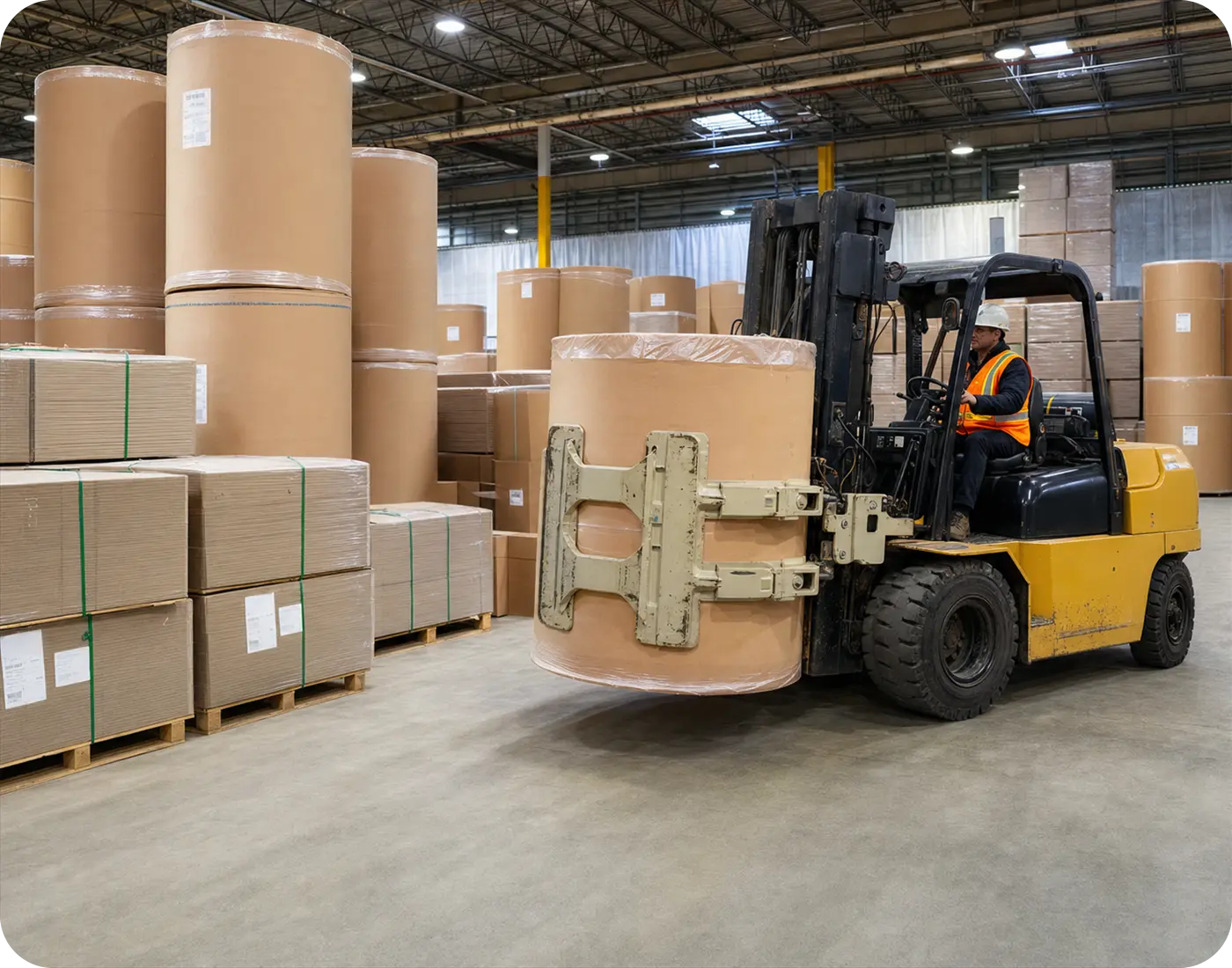
The paper and packaging industry transports a wide variety of products, from heavy paper rolls and pulp to lightweight cartons, corrugated packaging, and finished paper products. Each shipment has unique handling requirements based on its weight, size, and packaging. Heavy materials require secure loading, while lighter products are more susceptible to crushing, shifting, and damage during transit. Moisture exposure is another major concern, as it can affect product quality, printing performance, and overall usability before the shipment even reaches its destination.
Dependable Freight Solutions provides personalized to your needs freight solutions that protect paper and packaging products throughout transit while ensuring reliable, cost-effective, and on-time delivery.

Paper and Packaging Cargo We Review

Product forms across this sector vary widely in weight, stability and sensitivity:

Operations We Serve

Paper and Board Mills

Producers shipping roll stock, sheeted product and pulp to converters and printers. Loads are weight-dense, high in value per trailer, and generally run on established lanes with predictable frequency.

Corrugated Plants and Sheet Feeders

Operations producing sheet, blanks and finished boxes. Inbound roll stock is heavy and outbound product is bulky and crush-sensitive, making the two legs of a lane structurally different.

Commercial Printers

Printing operations receiving paper and shipping finished print runs. Inbound freight is moisture-sensitive and schedule-critical, since press time is booked and idle presses are expensive.

Packaging Converters and Manufacturers

Producers of cartons, labels, flexible packaging and protective inserts serving food, consumer goods and industrial customers. Shipment frequency is high and replenishment cycles are tight.

Packaging Distributors and Supply Houses

Distributors supplying boxes, film, tape and consumables to warehouses and manufacturers. Freight is bulky, low density and moves in frequent partial loads.

Recyclers and Fibre Recovery Operations

Businesses handling OCC, mixed paper and baled recovered fibre moving back toward mills. Density is high, packaging is minimal, and pickup access at collection sites often governs equipment choice.
Applying Our Services to This Sector

Less Than Truckload (LTL)

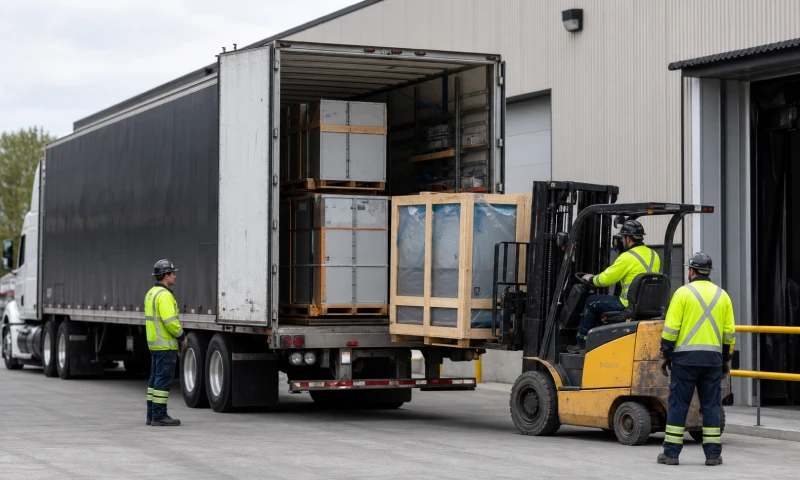
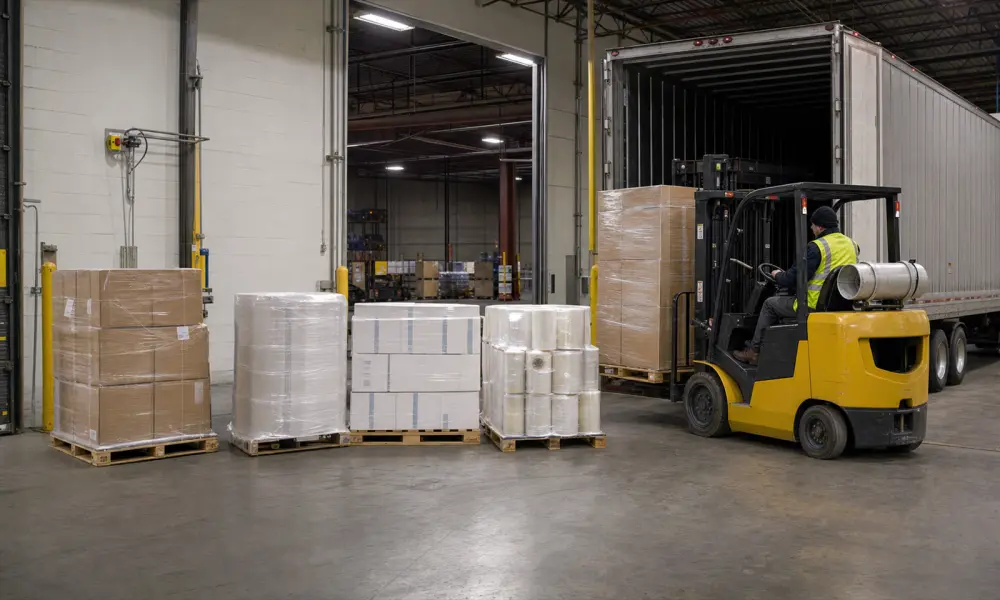
LTL fits packaging distributors, print shops and converters moving partial loads of cartons, labels, film and consumables. It suits frequent replenishment where a dedicated trailer would run half empty. Because loads share space and this product crushes easily, palletizing and wrapping quality directly determine what arrives intact.

Full Truckload (FTL)

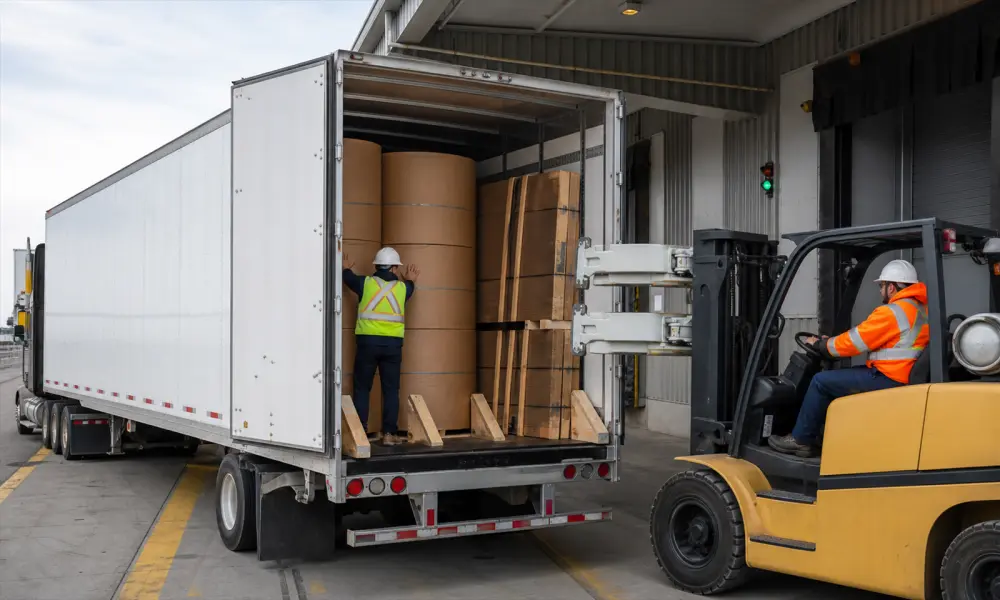
FTL is the standard for roll stock, pulp, sheeted paper and consolidated converter freight. A dedicated trailer means the load is secured once and untouched until delivery, which matters when handling itself is the main damage risk. It also fits high-cube corrugated loads that fill a trailer regardless of weight.

Heavy Haul

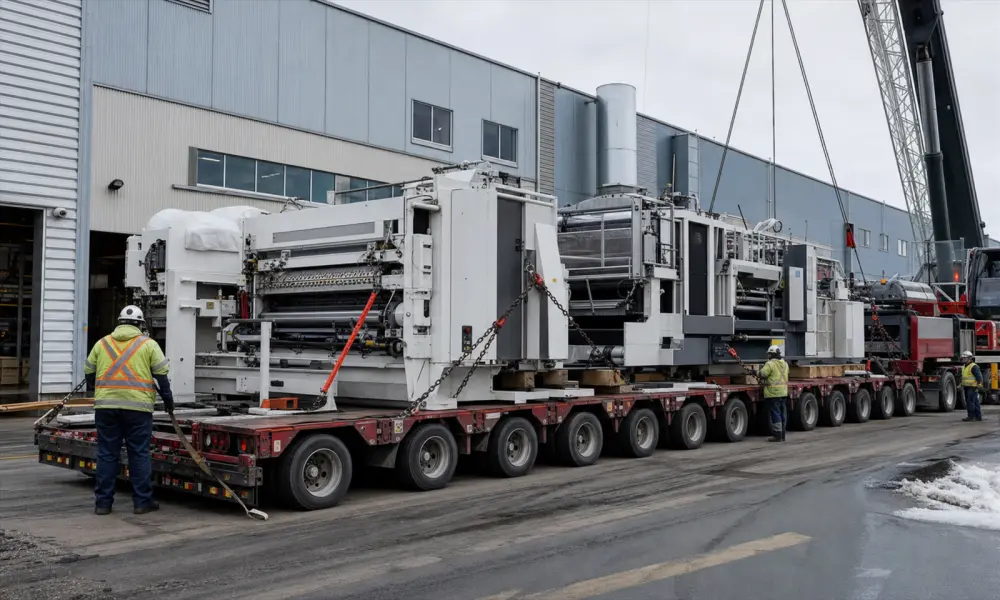
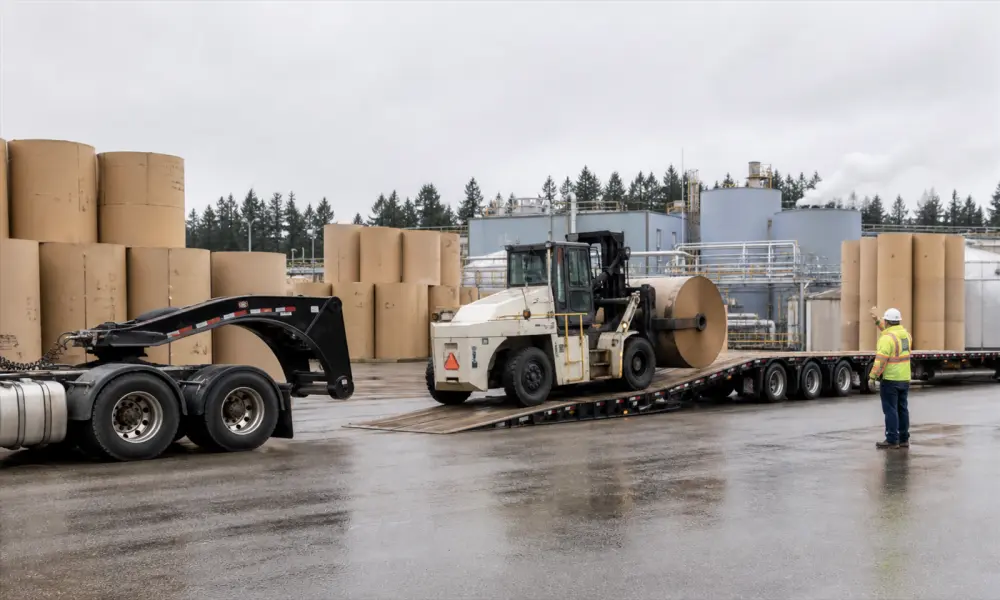
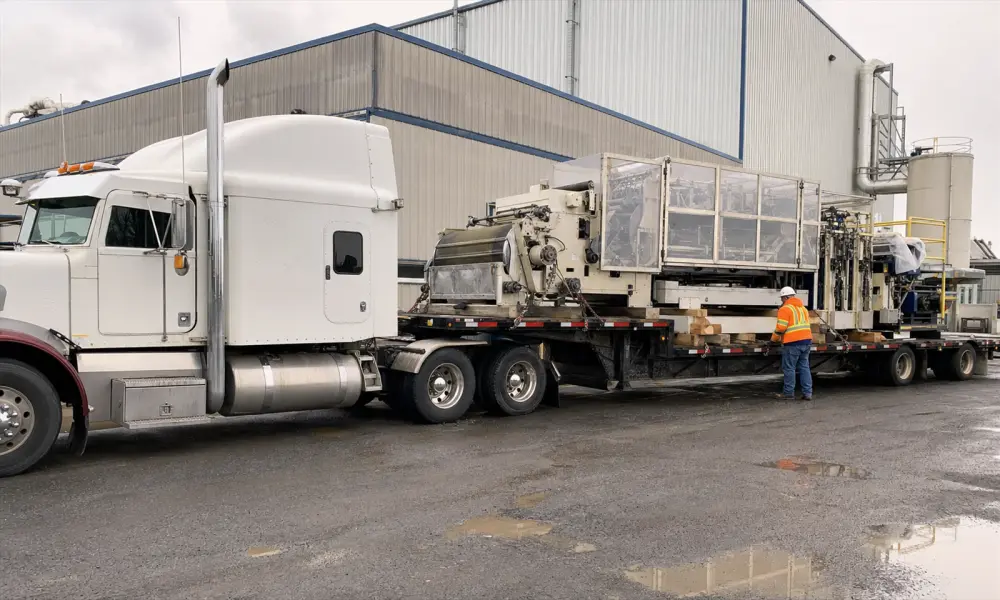
Heavy haul covers converting and printing equipment: presses, die cutters, folder gluers, corrugators and roll handling systems exceeding standard limits. Plant installations and line relocations run on this service, with route review, equipment selection and permitting completed ahead of any committed date.

Picking the Right Service for Paper Freight

Service Best For Capacity Typical Aerospace Cargo
LTL Partial loads, recurring small shipments 1 to 6 pallets typical Machined parts, fasteners, hardware, crated avionics
FTL Full or exclusive-use loads Full trailer Sub-assemblies in fixtures, consolidated pallets, composite panels
Heavy Haul Oversized or overweight freight Specialized equipment Assembly jigs, machine tools, test rigs, large structures
Volume answers almost nothing here. A trailer of rolls and a trailer of boxes are both full, and they have nothing else in common.
What settles the decision: does the load reach weight capacity or cube capacity first? Are rolls shipping on end or on side, and does the receiving site have clamp trucks or roll handling equipment? Is the product moisture-sensitive enough to require full enclosure rather than tarping? How stable is the stack, and will it hold through the braking and cornering of a long eastern run? Is the freight going to a press with booked time, in which case schedule reliability outranks everything else? And does the return leg carry recovered fibre or empty pallets worth planning at the same time?
Tell us the product form and how the destination unloads it. Those two answers eliminate most of the wrong options immediately.

Equipment Matched to Product Form

For paper and packaging, the trailer decision is mostly a protection and securement decision. Open deck exposure that is fine for steel is unacceptable for board stock, and securement that works for a crate does nothing useful for a roll.

Roll-Tite

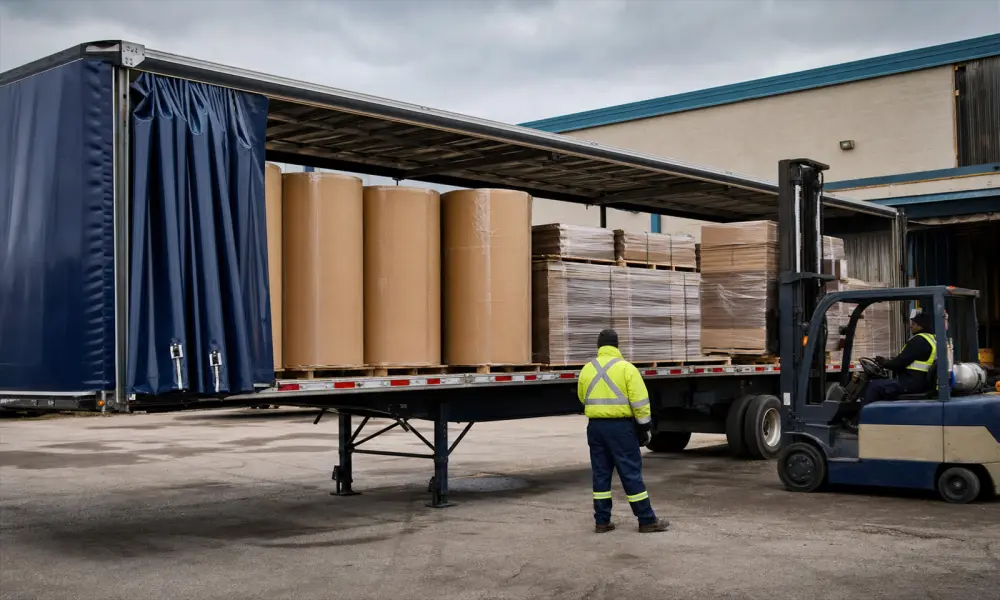
Rolling tarp over a flat deck, giving full enclosure with side and overhead loading access. This is the natural fit for moisture-sensitive roll stock and sheeted product that needs to stay dry while still allowing loading methods a rear door would prevent.

Flatbed

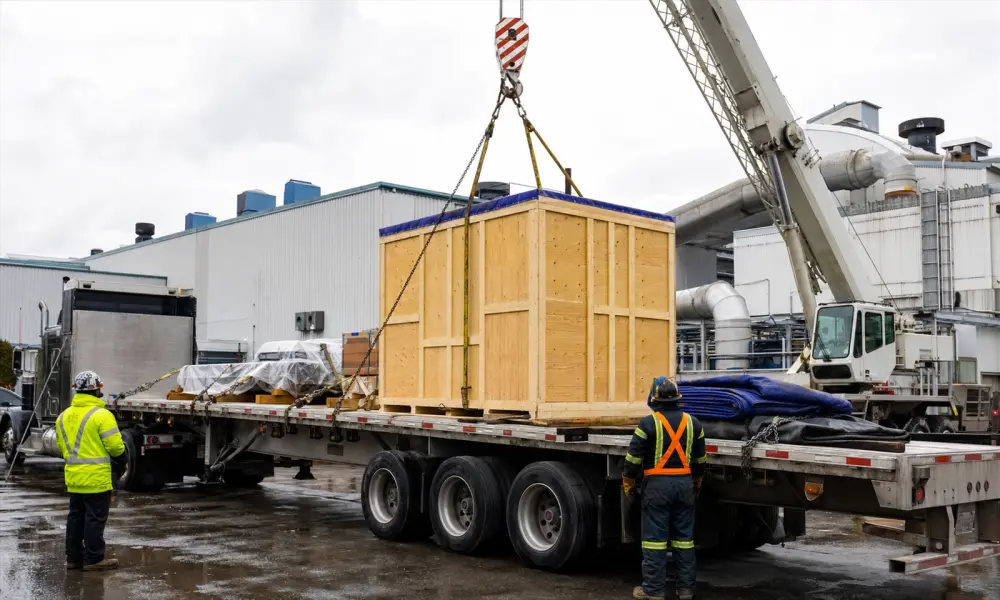
Open deck access from all sides. Suited to crated equipment, pallets, dunnage and packaged product that tolerates tarping or does not require enclosure. Straightforward where crane or side loading is the method.

Step Deck

The lowered deck adds height clearance, relevant for tall converting equipment, roll handling systems and machinery on skids that would exceed legal height on a standard deck.

Lowboy

The lowest deck height, built for tall and heavy machinery. Applies to large presses, corrugator sections and heavy converting equipment where clearance and weight both constrain the move.

RGN (Removable Gooseneck)

The gooseneck detaches into a ramp for drive-on or winch-on loading, useful for wheeled plant equipment and machinery that cannot be lifted onto a deck.

Lanes We Run

Pulp, paper and packaging manufacturing has deep roots across the corridor we serve. Quebec and Atlantic Canada carry significant mill capacity, while southern Ontario concentrates converting, printing and packaging distribution. That geography produces genuine two-way freight rather than a loaded run and an empty return.

Ontario to the East Coast

Eastbound loads commonly carry finished packaging to food processors, fish and seafood operations and consumer goods manufacturers in Quebec and Atlantic Canada, along with printed materials, labels, film and packaging consumables to regional distributors. Converting equipment also moves this direction during plant upgrades. Replenishment lanes into processing operations tend to run on tight cycles, and scheduled recurring pickups suit them better than ad hoc booking.

East Coast to Ontario

Westbound freight is often raw material moving toward converters: roll stock and pulp from Quebec and Atlantic mills heading to Ontario printers and corrugated plants. Recovered fibre and baled OCC also travel this direction toward reprocessing. Because outbound packaging is bulky and inbound paper is dense, planning the pair together makes better use of capacity than treating each leg as a separate problem.

What Happens After You Contact Us

1.

Product form review.

Tell us what the product is and how it is presented: roll dimensions and weight, skid counts, bundle configuration, bale weights. Product form drives everything else.

2.

Sensitivity and enclosure assessment.

We establish whether the freight requires full enclosure, and what exposure it can and cannot tolerate on the route.

3.

Loading and handling check.

How the load comes on and off at each end, including clamp truck availability, roll orientation and dock configuration.

4.

Service and equipment recommendation.

LTL, FTL or heavy haul is proposed with the trailer type suited to protection and loading requirements.

5.

Securement planning.

Cradling, chocking and restraint are planned against the specific product form rather than applied generically.

6.

Delivery and return coordination.

Freight is delivered to the agreed window, any recovered fibre or empty return leg is arranged, and documentation is completed.

Reasons Paper and Packaging Shippers Stay With Us

Damage Prevention Built Into Planning

Securement and enclosure are decided against product form before the truck arrives, which is when damage is actually prevented.

Two-Way Lane Thinking

Dense inbound and bulky outbound are planned as a pair, which uses capacity better than treating each direction in isolation.

Press Schedule Awareness

We understand that paper arriving late is not a delivery problem, it is a press downtime problem, and we plan the delivery window accordingly.

Equipment Relocation Capability

Presses, die cutters and converting lines move through the same relationship that handles your daily freight.

Consistent Recurring Service

Mill to converter and converter to customer lanes can run on a fixed schedule, giving planners a transit expectation to build inventory targets around.

Practical Answers on Packaging

If freight is presented in a way that will not survive the trip, we say so before it loads rather than after it arrives damaged.
Questions From Paper and Packaging Shippers

How should rolls be presented for shipping, on end or on side?
Both are workable, but they call for different securement and different handling equipment at delivery. Confirm the orientation and the receiving site’s roll handling capability when you enquire, since changing it later can mean changing the trailer.
Enclosed Roll-Tite equipment protects against precipitation and road spray, which addresses the main transit exposure. It is not humidity controlled, so product with controlled environment requirements should be flagged at enquiry.
Yes. Cube capacity and weight capacity are both real limits, and reaching either one makes it a full load. Bulky low-density freight is normal in this sector and is planned accordingly.
Yes, subject to review. Bale weight, stability and pickup site access are the main planning factors, particularly at collection facilities without conventional docks.
Yes. These move on step deck, lowboy or RGN equipment depending on height and weight, with route review and permitting completed before a date is committed. Rigging and lift arrangements at both sites need confirming during planning.
We raise it before loading. Loading unstable freight helps nobody, and in this product category damage is rarely repairable.
Recurring lanes can be arranged on a fixed schedule, which is common for mill to converter and converter to customer movements.

Get in Touch with Dependable Freight Solutions

If you’re ready to schedule a shipment, need a price quote or want to learn more about our freight forwarding service, our team is here to help. We make freight transportation easy, efficient and reliable for businesses throughout Atlantic Canada. Dependable Freight Solutions provides professional freight services, speedy freight delivery and reliable logistics support!