

Roll-Tite and Conestoga Trailer Services Between Ontario and the East Coast

Move commercial and industrial freight with the deck access of an open trailer and the covering of an enclosed one. Dependable Freight coordinates Roll-Tite transportation between Ontario and Canada’s East Coast, matching equipment to your cargo dimensions, loading method, route and delivery requirements. Send us the load details and our team will confirm whether this equipment suits the shipment.

Flexible Loading and Covered Protection From a Roll Tite Trailer

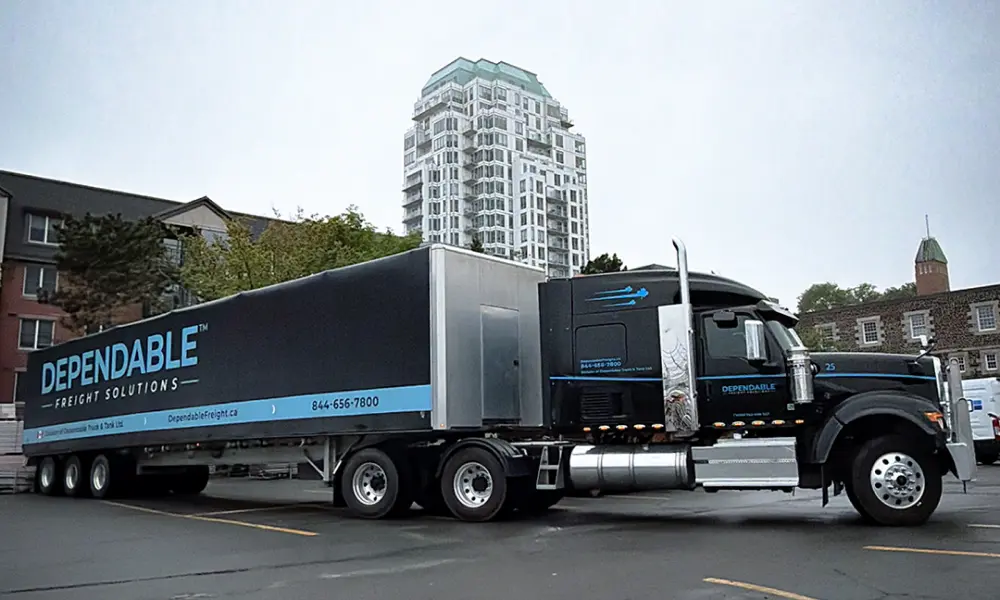
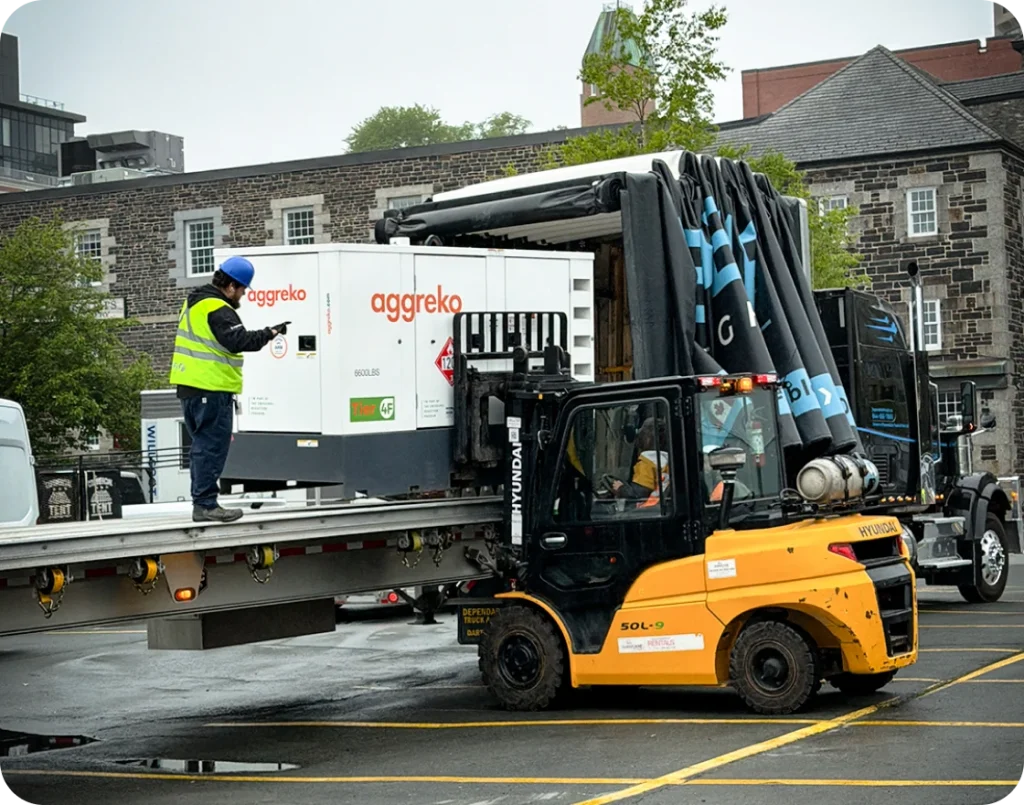
This equipment is an open deck platform fitted with a curtain and roof system that runs on rails along the length of the trailer. The covering slides back toward one end, which opens the deck for loading from the side or from directly above, then closes around the freight before the load leaves the yard. It sits between two familiar options. A standard enclosed van loads through rear doors, which suits palletized goods but limits access for anything needing a forklift at the side or a crane overhead. An uncovered deck gives complete access but leaves freight exposed to rain, snow and road spray unless it is tarped by hand. Freight that is awkward to load is where this trailer earns its place. Machinery, long components and irregular crates can be set on the deck from the most practical angle and still travel covered.
Trailer suitability depends on the freight dimensions, weight, loading method, route, securement requirements and available equipment.

Is a Roll Tite Flatbed Right for Your Shipment?

Shippers usually arrive at this equipment after finding that a dry van is hard to load and an open deck leaves the cargo too exposed. The decision comes down to how the freight gets on the trailer and what it needs protecting from once it is there. Run through the list below before you request a quote. If several points describe your load, send the details and our team will confirm equipment availability on your lane. If none of them apply, a different trailer is probably the better answer, and we will say so rather than force the fit onto equipment that was never built for it.
This equipment may be appropriate when:

Freight We Evaluate for Roll Tite Truck Transportation

Most of what moves on this equipment falls into one of two groups. The first is freight that is simply difficult to load through a rear door, such as machinery on skids or components that arrive at the dock on a crane hook. The second is freight that would ride happily on an open deck if the weather could be relied on, which along this corridor it cannot.
Potential applications include:

Acceptance note: Shipment acceptance is based on the cargo type, complete dimensions, total weight, packaging, securement needs, route & trailer availability. Restricted or regulated freight may require additional review. Loads outside standard limits may need step deck, flatbed or heavy haul equipment instead.

Benefits of Flatbed Roll Tite Transportation

Heavy haul moves depend on permits, route approval and legal weight limits. Capacity is never assumed until the route and the load have both been reviewed.

Weather Protection

The retractable covering helps protect approved freight from weather and road exposure during transportation.

Flexible Side Access

The covering can be moved along the rails to open the deck for forklift loading and unloading at either side.
Overhead Loading

Cargo may be loaded or unloaded by crane when rear door access is not practical at the shipping or receiving site.

Open Deck Flexibility

This equipment combines many of the loading advantages of an open deck with covered transportation on the same trip.

Suitable for Irregular Freight

The trailer may support approved cargo that is difficult to load into a standard enclosed trailer because of its shape, length or lifting points.

Reduced Tarping Requirements

The integrated covering can provide a more structured protection option than manually applied tarps, depending on the load.

Roll-Tite Trailer Services for LTL and Full Truckload Freight

A Roll-Tite deck combines cover with side and overhead access, so freight can be forklifted or craned on and still travel enclosed. The service question is whether the shipment fills the trailer or shares it.

Covered LTL Freight on a Roll-Tite Deck

Palletized and crated goods that need protection from weather but not a full trailer can move on shared capacity. Covered space on a given lane and date is confirmed at quoting.

Dedicated Roll-Tite Capacity for Full Truckload

When a shipment fills the deck or the commodity should not travel alongside other freight, the trailer runs for you alone with the schedule built around that load.

Loads That Sit Outside the Curtain

Freight that will not close inside the tarp system moves the open deck under permit instead. We review the loaded dimensions before committing to covered equipment.

Conestoga Semi Trailer Transportation Across Ontario and Canada's East Coast

Dependable Freight Solutions evaluates covered open deck shipments across approved routes connecting Ontario, Quebec, and Atlantic Canada. Freight moves in both directions along this corridor, so eastbound and westbound loads are planned with the same attention rather than one being treated as a return trip. One-time commercial shipments and recurring freight requirements share the same equipment pool.

Ontario to East Coast Roll-Tite Freight

Protected freight leaving Ontario for approved Atlantic Canadian destinations, with equipment matched to the loading method at the shipping point.

East Coast to Ontario Roll-Tite Freight

Covered deck freight moving from approved East Coast locations back into Ontario.

Roll-Tite Transportation in Ontario

Weather-protected loading and delivery across Ontario manufacturing and distribution points.

Roll-Tite Transportation in Quebec

Curtain-sided freight moving through Quebec between Ontario and the Atlantic provinces.

Roll-Tite Transportation in New Brunswick

Covered deck capacity on approved New Brunswick routes.

Roll-Tite Transportation in Nova Scotia

Overhead and side-loaded freight kept covered to approved Nova Scotia locations.

Roll-Tite Transportation in Prince Edward Island

Weather-sensitive freight delivered to approved Prince Edward Island destinations.

Roll-Tite Transportation in Newfoundland and Labrador

Covered deck freight serving approved Newfoundland and Labrador locations.

How We Review Lowboy Trailer Load Capacity Before Dispatch

1.

Submit Your Cargo Details

Provide the freight type, dimensions, weight, origin, destination and requested shipping date. Photographs of an unusual load save a round of questions.

2.

Review Loading Requirements

Our team confirms whether the cargo needs side, rear, forklift or overhead crane loading, and what is available at each site.

3.

Confirm Trailer Suitability

The shipment is reviewed to determine whether this equipment, a flatbed, a step deck or another trailer is the right answer.

4.

Plan the Route and Schedule

Equipment availability, route, pickup access and delivery requirements are coordinated into a shipment plan you can work to.

5.

Coordinate Pickup and Delivery

The freight is loaded, secured, covered and transported according to the approved plan, with updates through the trip.

Why Businesses Choose Dependable for Roll Tite Conestoga Freight

Shipment Specific Evaluation

Cargo details are reviewed before this equipment is recommended, not after the truck has been dispatched.

Multiple Trailer Options

Access to Roll-Tite, flatbed, step deck, lowboy and RGN transportation, so the recommendation is not limited by what we happen to own.

Flexible Service Lines

LTL, full truckload and heavy haul solutions are available depending on deck space, handling and timing requirements.

Corridor Coverage in Both Directions

Transportation connecting Ontario, Quebec and approved Atlantic Canadian destinations, planned eastbound and westbound.

Commercial and Industrial Experience

Freight planning for machinery, components, materials and packaged business goods rather than general parcel work.

Responsive Coordination

Clear assistance during quoting, equipment selection, scheduling, pickup and delivery, with a name attached to your file.

Frequently Asked Questions About Roll Tite Trailer Dimensions and Loading

What is the difference between this trailer and a Conestoga?
The names are often used for the same thing. Both describe an open deck trailer with a sliding cover on rails. Manufacturers and carriers use different brand names for similar systems, so tell us what your freight needs and we will confirm the equipment rather than debating the label.
[PLACEHOLDER: Fleet specification sheet] Deck length, deck width, usable height under the cover and maximum payload vary by unit. Supply the verified specifications and this answer becomes a short table, which is what shippers searching for dimensions are looking for.
Yes, overhead loading is one of the main reasons shippers choose this equipment. Confirm crane availability, lifting points and clearance at both the pickup and delivery sites when you request the quote.
Functionally it is close. The load rides on an open deck, and the covering system replaces the manual tarping a flatbed would need. The difference is that the cover is built into the trailer and moves on rails.
No. The system protects against weather and road exposure. It provides no heating, cooling or humidity control, and it should not be used for temperature sensitive freight.
Possibly. Smaller shipments are reviewed individually because shared covered deck space depends on the other freight on the trailer, the loading sequence and the route.
[PLACEHOLDER: Service scope] Confirm covered open deck availability to these provinces before answering. Our current corridor pages cover Ontario, Quebec, New Brunswick and Nova Scotia.
Specialized equipment is a smaller part of any fleet than dry vans, so earlier notice gives you more scheduling options. Send the load details as soon as the ship date is known and we will tell you what is realistic.