

Flatbed Trailer Services Between Ontario and the East Coast

Some freight cannot go through a door. It has to come down onto the deck from above or in from the side. Dependable Freight coordinates open deck transportation between Ontario and Canada’s East Coast for steel, machinery, building products and industrial materials, planned around your load dimensions, weight, securement needs and site access at both ends.

Open Deck Access Through Flatbed Freight Shipping

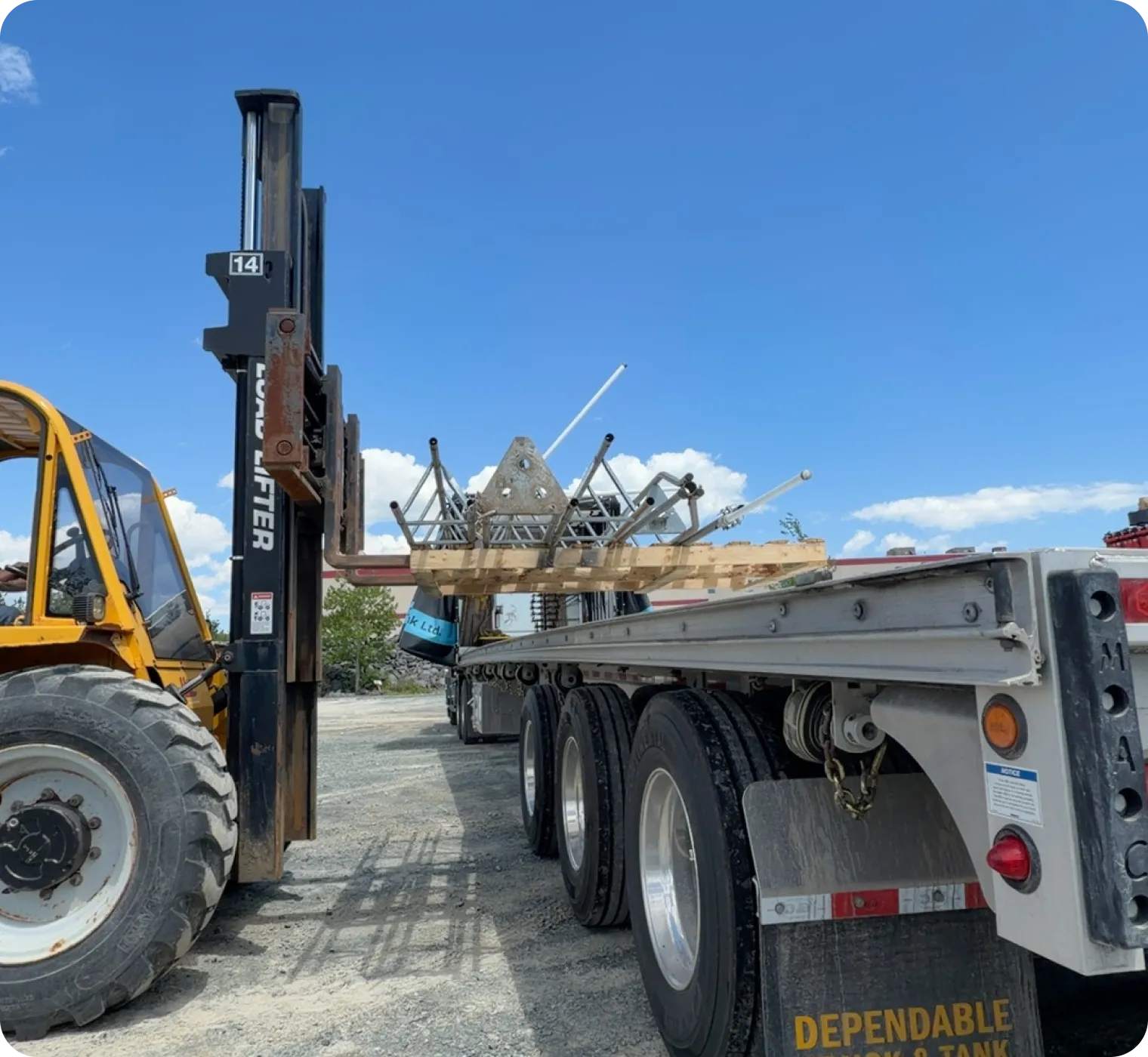
A flatbed is the simplest trailer in commercial transportation and, for a large share of industrial freight, the most useful. It is a single level platform with no walls, no roof and no doors. Cargo can be lifted on by crane, pushed on by forklift from either side, or slid on from the rear, and nothing about the trailer restricts the shape of what it carries.
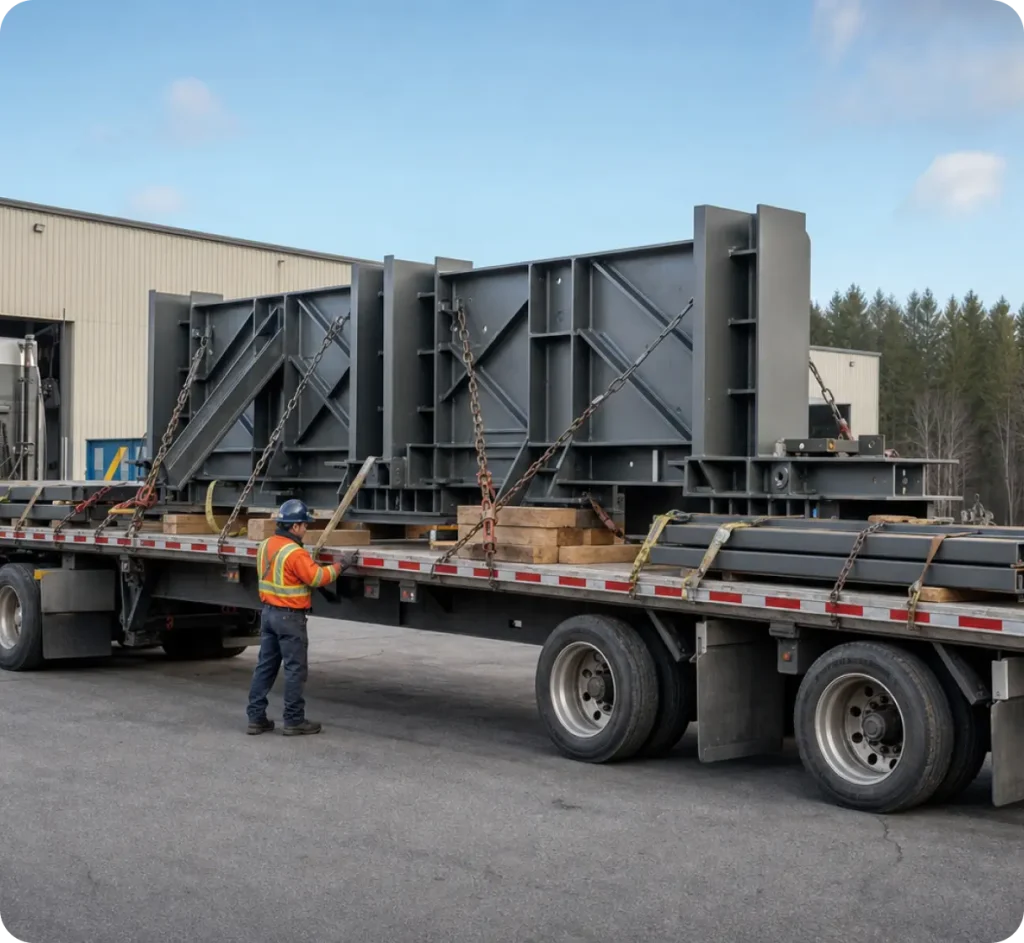
The freedom comes with two responsibilities. Securement matters more, because chains, straps, blocking and edge protection are the only things holding the load in place. Weather protection is added rather than built in, which means tarping when the cargo needs it.
Height is the main limit. Because the deck sits at full height, tall freight reaches legal ceilings faster here than on a lower deck, which is when a step deck enters the conversation.

Trailer suitability depends on the freight dimensions, weight, loading method, route, securement requirements and available equipment.

Is a Flatbed Semi Trailer Right for Your Shipment?

The question is rarely about the trailer. It is about the loading dock. If the freight can be lifted onto a deck faster than it can be manoeuvred through a rear door, an open deck usually wins on both time and handling risk.

The second consideration is shape. Cargo that overhangs, sits on an irregular base, or needs to be blocked and chained rather than shrink wrapped belongs on a deck. Work through the points below, then send us the load details so we can confirm equipment on your lane and date. Measured dimensions are worth more than estimates here, because deck length and legal height decide the answer.

This equipment may be appropriate when:

Freight We Evaluate for Flatbed Freight Loads

Flatbed volume along this corridor is driven by construction, manufacturing and heavy industry. The common thread is not weight so much as handling: this is freight that gets lifted rather than rolled, and measured rather than counted. Much of it also travels on a project schedule, where a missed delivery holds up a crew rather than a shelf.
Potential applications include:

Acceptance note: Shipment acceptance is based on the cargo type, complete dimensions, total weight, packaging, securement needs, route and trailer availability. Restricted or regulated freight may require additional review. Loads beyond legal dimensions may require permits and heavy haul equipment.

Benefits of Flatbed Truck Transport

Heavy haul moves depend on permits, route approval and legal weight limits. Capacity is never assumed until the route and the load have both been reviewed.

Loading From Any Direction

Cargo can come on from the side, the rear or overhead, so the trailer adapts to the site instead of the site adapting to the trailer.

No Shape Restrictions

An open platform carries irregular, long or awkward freight that would not fit through a van door in any orientation.

Faster Turnaround

Crane and forklift loading can move heavy items on and off in less time than manoeuvring them inside an enclosed trailer.

Simple Securement

Chains, straps, blocking and dunnage can be applied directly to the deck at the points the load actually needs.

Site Delivery Without a Dock

Freight can be offloaded at yards, plants and job sites where no loading dock exists, given suitable equipment on site.

Wide Equipment Range

Standard decks handle most loads, with drop deck and double drop options available when height becomes the limit.


Open deck freight travels exposed unless tarped. Tarping is arranged where cargo requires it, and cannot be assumed as included on every load.

Flatbed Trailer Services Across LTL, Full Truckload and Heavy Haul

Open deck freight loads from the side, the rear or overhead, and that access is what shapes the service. The question is whether the shipment needs the full deck or can move alongside other freight heading the same direction.

Partial Deck Space on LTL Freight

Steel, building materials and palletized freight that does not fill a deck can share one. You pay for the space the load occupies, and securement and tarping are handled as the commodity requires.

Dedicated Flatbed Capacity for Full Truckload

When the shipment fills the deck or cannot travel alongside other freight, the trailer runs for you alone. Route and schedule are built around that single load.

Oversized Flatbed Loads Under Permit

Freight past legal width, length or weight still moves on an open deck, with permits and approved routing arranged before dispatch. Lead times run longer and we account for that at quoting.

Flatbed Shipping Across Ontario and Canada's East Coast

Deck availability shifts with construction season, so earlier notice gives you better options on busy routes. Weather planning matters more here than on any other service line, since winter runs through Quebec and Atlantic Canada brings salt, spray, and freezing rain into contact with cargo that has no walls around it. That shapes the tarping conversation before a load is confirmed. Explore your corridor or your province below to see where we run open deck freight.

Ontario to East Coast Flatbed Freight

Steel, machinery, and building materials leaving Ontario for approved Atlantic Canadian destinations, with securement planned to the route.

East Coast to Ontario Flatbed Freight

Freight originating at approved East Coast locations and running west into Ontario on the same lanes.

Flatbed Transportation in Ontario

Open deck pickups and deliveries across Ontario industrial and construction sites.

Flatbed Transportation in Quebec

Tarped and untarped loads moving through Quebec on the East Coast corridor.

Flatbed Transportation in New Brunswick

Building materials and industrial freight on approved New Brunswick routes.

Flatbed Transportation in Nova Scotia

Side-loaded and crane-loaded freight serving approved Nova Scotia locations.

Flatbed Transportation in Prince Edward Island

Open deck loads delivered to approved Prince Edward Island destinations.

Flatbed Transportation in Newfoundland and Labrador

Open deck loads serving approved Newfoundland and Labrador locations.

How We Review Lowboy Trailer Load Capacity Before Dispatch

1.

Send Your Load Details

Provide length, width, height, weight, origin, destination and requested ship date, plus how the freight will be lifted.

2.

Match the Deck to the Freight

Our team confirms the deck length and configuration the load needs, and whether height pushes it onto a lower deck.

3.

Plan Securement and Tarping

Chain, strap, blocking and edge protection requirements are established, along with whether the cargo travels covered.

4.

Confirm Route and Site Access

Route restrictions, overhead clearance, yard conditions and available lifting equipment at both ends are checked before dispatch.

5.

Load, Secure and Deliver

The freight is loaded, secured to plan, tarped where required and transported with updates through the trip.

Why Businesses Choose Dependable as a Flatbed Carrier

Shippers comparing flatbed truck carriers usually find similar equipment lists and very different planning habits. The gap between flatbed shipping companies shows up in securement decisions, site questions asked before dispatch, and how early a problem gets raised.

Securement Planned, Not Improvised

Chain, strap and blocking requirements are worked out against your specific load before the truck arrives.

Site Access Confirmed Early

We ask about lifting equipment, yard conditions and clearance at both ends while quoting, not on delivery day.

Complete Open Deck Range

Standard decks, step decks, curtain sided units, lowboys and RGN options in one conversation.

Weather Judgement on Winter Lanes

Tarping and route decisions reflect real conditions across Quebec and Atlantic Canada rather than a standard answer.

Industrial Freight Background

Planning built around steel, machinery and construction materials rather than general palletized goods.

Direct Answers on Fit

If the freight belongs on different equipment, needs a permit, or should not travel open at all, we say so at the quote.

Frequently Asked Questions About Flatbed Trailer Types

What is the standard flatbed trailer width and deck length?
[PLACEHOLDER: Fleet specification sheet] Deck width, deck length and rated payload vary by unit. Supply the verified specifications and this answer becomes a table, which is what shippers searching dimension questions expect to find.
A broker arranges transportation and places your freight with a carrier. A carrier operates the equipment and moves the load. Dependable Freight operates as a carrier, so the equipment decision, the securement plan & the delivery all sit with the same team.
[PLACEHOLDER: Fleet composition] Deck material affects tare weight and therefore available payload. Confirm what is in service before this answer is published, since it changes the payload conversation on heavy loads.
No. Tarping is arranged where the cargo requires protection and is confirmed at quoting. If the freight must stay covered for the entire trip, a curtain sided trailer is often the better choice.
Overhang is governed by provincial regulation and varies by dimension and direction. Send the measured length and we will confirm what travels legally and what needs a permit.
Often yes, provided suitable lifting equipment is available on site. Open deck freight is regularly delivered to yards, plants and construction sites, but the unloading method has to be arranged in advance.
It moves to a step deck, or to a double drop or RGN configuration if the height is greater still. We check this at quoting so the trailer that arrives is the one that can legally carry the load.
Partial loads are reviewed individually. Sharing depends on the other freight on the deck, the loading sequence and securement, so it cannot be promised in advance on every lane.