
Automotive Freight and Parts Transportation From Ontario to Eastern Canada

Automotive freight lives and dies by cadence. Dependable Freight Solutions hauls commercial automotive shipments across Ontario, Quebec and approved East Coast destinations, from palletized components and returnable racks to stamping dies and plant equipment. We review the load, the docks at both ends and the route before recommending a service, so the plan holds up on delivery day.

What Automotive Logistics Actually Demands

Automotive is a sequencing business. Assembly plants pull components in a fixed order against a build schedule, and suppliers work backward from that schedule rather than from their own convenience. Every handoff between Tier 2, Tier 1 and the plant carries a window attached to it.
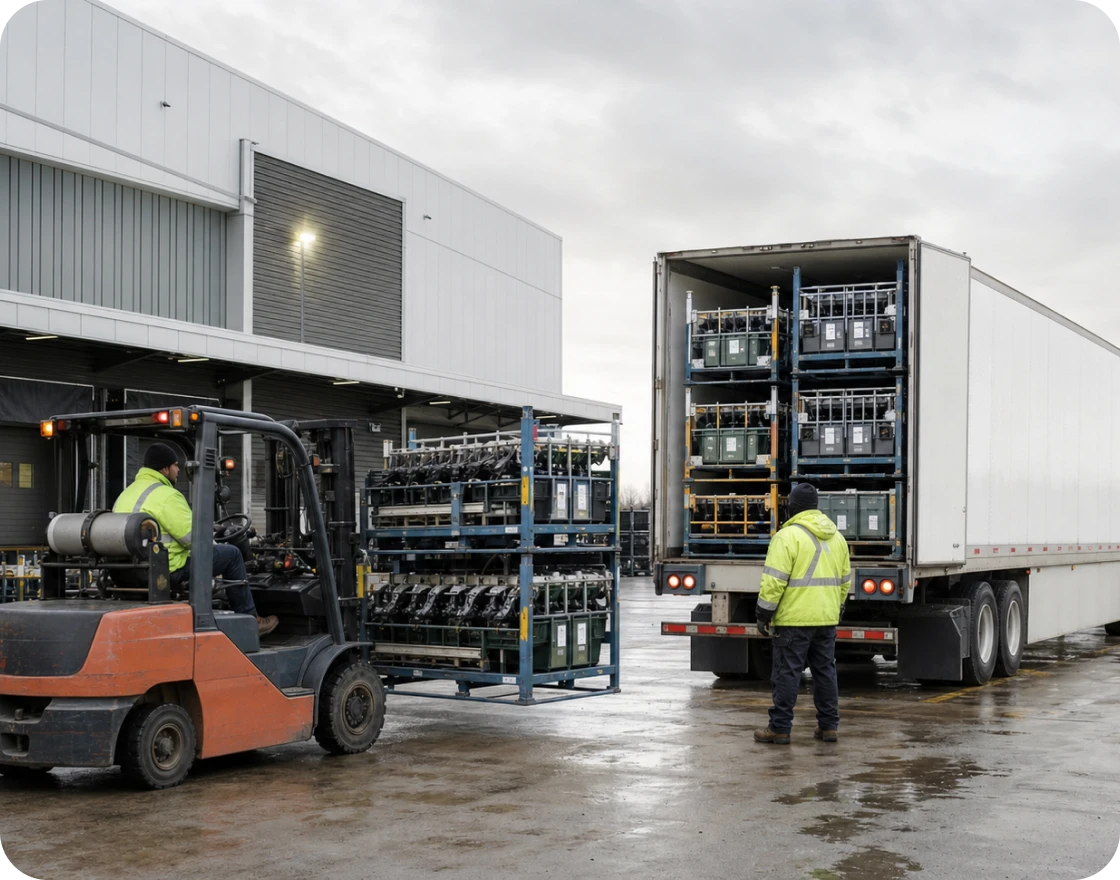
That produces two freight patterns. Production freight repeats on the same lane, often several times a week, in returnable racks that must come back empty. Project freight moves dies, presses and robotic cells during retooling, inside a shutdown that will not extend. Aftermarket distribution runs on a third rhythm entirely, driven by seasonal demand rather than build sequence.
Dependable Freight Solutions identifies which pattern a shipment belongs to before recommending equipment or a service level.

Automotive Cargo We Review

Freight profiles across this sector range from light and repetitive to heavy and one-time. Shipments we can assess include:

Automotive Operations We Support

Tier 1 Suppliers

Direct suppliers to assembly plants working against sequenced delivery windows. Freight volume is steady and lane-specific, with returnable packaging cycling continuously between the supplier and the plant.

Tier 2 and Tier 3 Component Makers

Stampers, machine shops, moulders and fabricators feeding upstream suppliers. Shipments are usually palletized or racked, moderate in size, and repeat on a weekly or daily pattern that suits scheduled pickups.

Aftermarket Parts Distributors

Warehouses supplying jobbers, installers and retail outlets. Their freight is high in SKU count and shipment frequency, with seasonal surges that make capacity planning more valuable than raw speed.

Dealership Groups and Service Networks

Multi-location operations moving parts inventory, equipment and displays between sites. Loads are typically partial, frequent and time-sensitive against service bookings.

Tooling and Die Shops

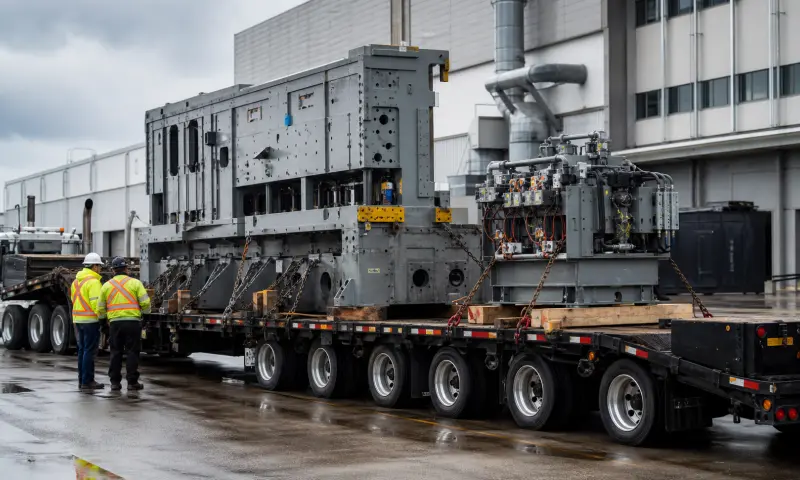
Builders and rebuilders of dies, fixtures and press tooling. Freight is heavy, concentrated and dimensionally awkward, which pushes it toward specialized deck equipment and planned lift arrangements.

Plant Engineering and Equipment Integrators

Teams installing or relocating production lines. Their moves cluster inside shutdown windows and involve oversized machinery where sequencing of arrivals matters as much as transit time.
Service Options for Automotive Freight

Less Than Truckload (LTL)

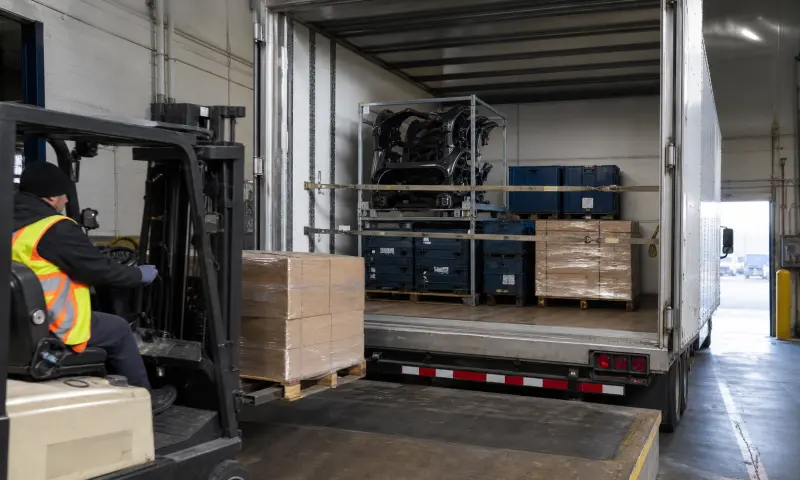
LTL fits automotive suppliers and distributors moving partial loads: palletized service parts, smaller racked components, and dealer replenishment freight. Cost tracks the space used rather than the trailer, which suits high-frequency shipping at modest volume. Sturdy packaging and clear labelling matter here, since loads share trailer space with other freight.

Full Truckload (FTL)

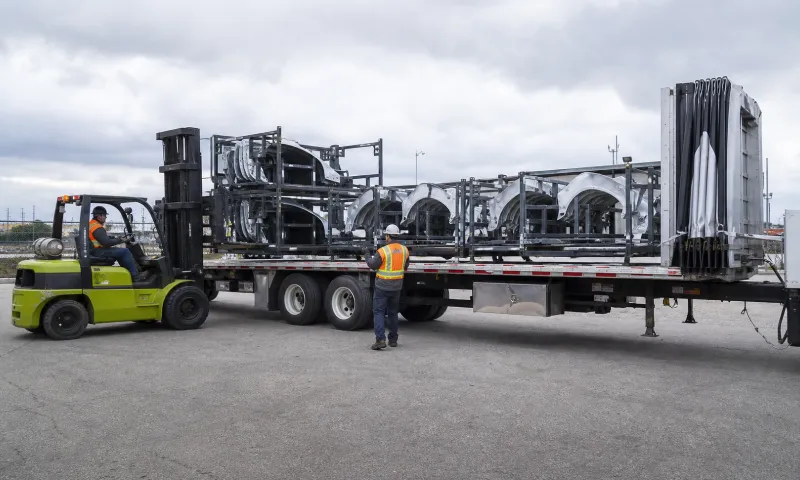
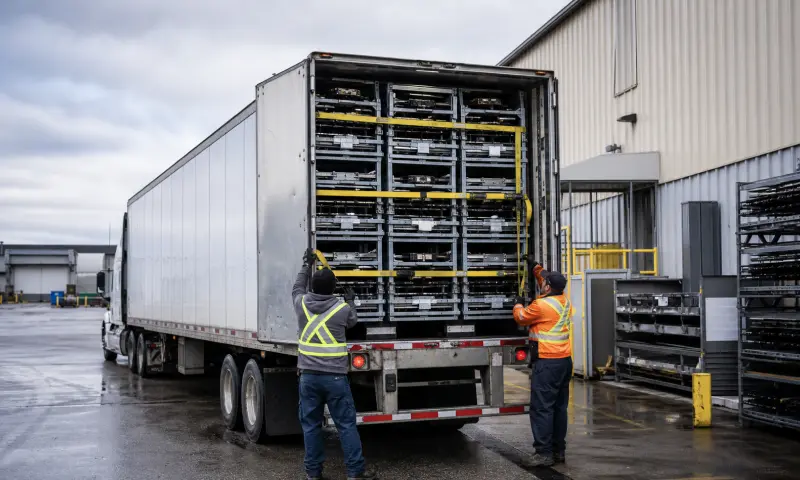
FTL suits production freight that fills a trailer or needs to stay untouched between pickup and delivery. Racked components, consolidated multi-pallet runs and shipments tied to a plant delivery window all benefit from dedicated capacity. Fewer handling points and a fixed schedule make it the practical choice when a missed window stops a line.

Heavy Haul

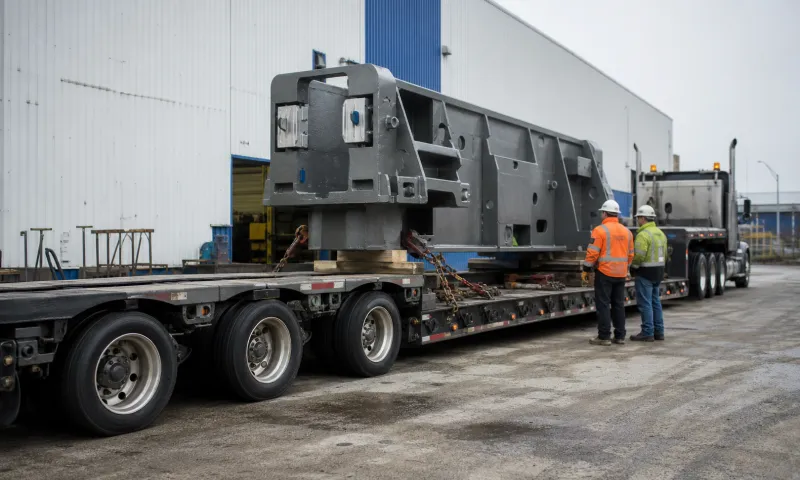
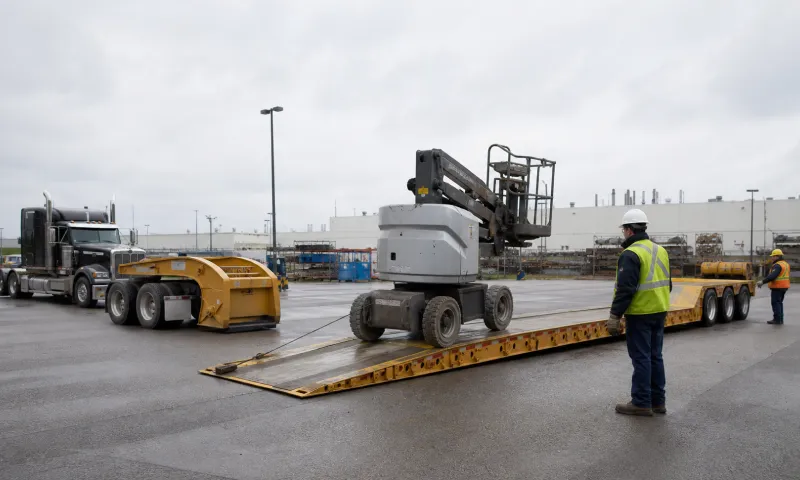
Heavy haul covers dies, presses, robotic cells, conveyor sections and machinery exceeding standard dimensional or weight limits. These moves need equipment selection, route review and permitting work completed before a date can be committed. Retooling and shutdown projects should start with this conversation rather than end with it.

Matching the Service to the Shipment

Service Best For Capacity Typical Aerospace Cargo
LTL Partial loads, recurring small shipments 1 to 6 pallets typical Machined parts, fasteners, hardware, crated avionics
FTL Full or exclusive-use loads Full trailer Sub-assemblies in fixtures, consolidated pallets, composite panels
Heavy Haul Oversized or overweight freight Specialized equipment Assembly jigs, machine tools, test rigs, large structures
Volume tells you the least. A trailer of empty returnable racks weighs almost nothing and still needs a full trailer. A single die weighs more than an entire load of trim and fits on a fraction of a deck.
What actually drives the decision: the footprint of the freight once it is racked or crated, whether it can be double-stacked, how it comes off the trailer at destination, and how much tolerance the delivery window has. Dock configuration is a recurring constraint in this sector, since many supplier facilities are built for specific trailer heights and approaches. Fragility matters for glass, painted panels and finished trim. Route and season matter on eastern lanes through winter, where transit variability should be built into the plan rather than discovered mid-trip.
Bring the constraints forward. It is easier to plan around a tight dock than to fix one at 6 a.m.

Trailer Selection for Automotive Loads

The trailer decides how the freight loads, how protected it is, and whether the receiving dock can work it. In automotive, where the same lane may carry racked panels one day and a press die the next, that decision changes shipment to shipment.

Roll-Tite

Rolling tarp over a flat deck, giving enclosed protection with side and overhead access. Useful for painted panels, finished trim and racked components that need to stay dry but cannot be loaded through a rear door.

Flatbed

Open access from every side. Suited to conveyor sections, structural steel for plant work, crated equipment and freight that can be tarped or does not require enclosure. The straightforward option when overhead lifting is the loading method.

Step Deck

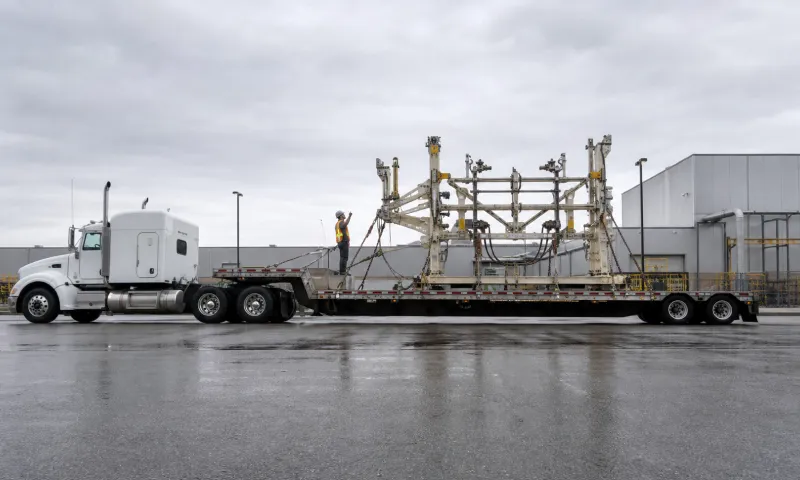
A lower rear deck buys height clearance. Applies to tall tooling, machinery on skids and equipment that would exceed legal height on a standard flatbed, and it lowers the deck for ramp loading.

Lowboy

Lowest deck height available, built around tall and heavy loads. Relevant to stamping presses, large machine tools and heavy production equipment where clearance is the binding constraint.

RGN (Removable Gooseneck)

The gooseneck detaches into a ramp so equipment can drive or be winched on. Practical for wheeled plant equipment and heavy machinery that cannot be craned onto a deck.

Lanes and Coverage

Automotive activity concentrates along the southern Ontario corridor and extends through Quebec, with parts distribution reaching into the Atlantic provinces. Most automotive lanes are two-directional by nature, because packaging that goes out full has to come back empty.

Ontario to the East Coast

Eastbound freight generally moves components and finished parts from Ontario suppliers toward Quebec facilities and Atlantic distribution points. Typical movements include recurring supplier runs on a fixed weekly cadence, consolidated aftermarket replenishment for regional warehouses, and project freight such as tooling or equipment heading to a plant undertaking a retool. Scheduled recurring pickups suit the first category well, since predictability is worth more than flexibility when a production plan depends on it.

East Coast to Ontario

Westbound loads commonly carry empty returnable racks and dunnage back to origin, Quebec-manufactured components moving to Ontario assembly operations, and redistributed aftermarket inventory. Planning the return leg alongside the outbound reduces the odds of racks accumulating at the wrong end of the lane, which is a common and expensive nuisance in this sector.

From Enquiry to Delivery

1.

Freight review.

Send the commodity, packaging format, dimensions as loaded, weight and both addresses. Rack dimensions matter more than part dimensions.

2.

Dock and access check.

We confirm trailer height, approach, lift equipment and any appointment requirements at both ends. Automotive receiving is often more restrictive than shippers expect.

3.

Service and equipment call.

LTL, FTL or heavy haul is recommended along with the trailer type that suits both the load and the sites.

4.

Route, timing and permits.

The lane is reviewed for restrictions, and oversized freight goes through permitting review before a date is committed. Delivery is planned against your window, not around it.

5.

Loading and securement.

Freight is loaded and secured using the method appropriate to the cargo, rack and trailer.

6.

Delivery, return leg and paperwork.

The load is delivered to the agreed window, any empty return is arranged, and documentation is completed.

What Automotive Shippers Get From Working With Us

Planning Before Pricing

The quote follows the review, not the other way around. Loading method, dock constraints and rack dimensions are settled before equipment is committed.

One Contact Across Load Types

Racked components, aftermarket pallets and press tooling can all be handled through the same relationship instead of three separate carriers.

Return Leg Coordination

Empty rack and dunnage returns are planned alongside outbound freight, which keeps packaging cycling instead of stranding it.

Lane Consistency

Repeat movements can run on a fixed schedule, giving your planners a transit expectation they can build a production plan around.

Shutdown and Project Capability

Retooling and equipment moves fall inside our scope, with route and permitting review handled as part of planning rather than left to the shipper.

Clear Documentation

Paperwork is prepared and confirmed with the shipment so receiving is not reconstructing details after the truck leaves.
Automotive Freight Questions

What do you need from us to quote a racked component shipment?
Rack dimensions and weight as loaded, the number of racks, both addresses, whether racks are stackable, and the delivery window. Part specifications matter far less than the packaging footprint.
Yes. Recurring lanes can be set on a fixed schedule, which is the usual arrangement for production freight moving several times a week.
Yes, and it is worth planning that leg at the same time as the outbound. Rack imbalance causes more production headaches than most shippers anticipate.
Dies and tooling are within scope and typically move on step deck, lowboy or RGN equipment depending on height and weight. Lifting arrangements at both ends need to be confirmed during planning.
These fall under regulated dangerous goods classifications and are assessed individually. We will confirm at quoting whether a specific shipment is one we can accept, and we will say plainly if it is not.
As early as the shutdown dates are known. Route review, permitting and equipment scheduling all sit ahead of the move, and shutdown windows do not extend to accommodate a late start.
It is a constraint, not a problem, provided we know about it during the access check. Dock restrictions are one of the most common reasons an equipment recommendation changes.

Get in Touch with Dependable Freight Solutions

If you’re ready to schedule a shipment, need a price quote or want to learn more about our freight forwarding service, our team is here to help. We make freight transportation easy, efficient and reliable for businesses throughout Atlantic Canada. Dependable Freight Solutions provides professional freight services, speedy freight delivery and reliable logistics support!